Ayatul Kursi: Meaning, Virtues and Where to Hang It at Home
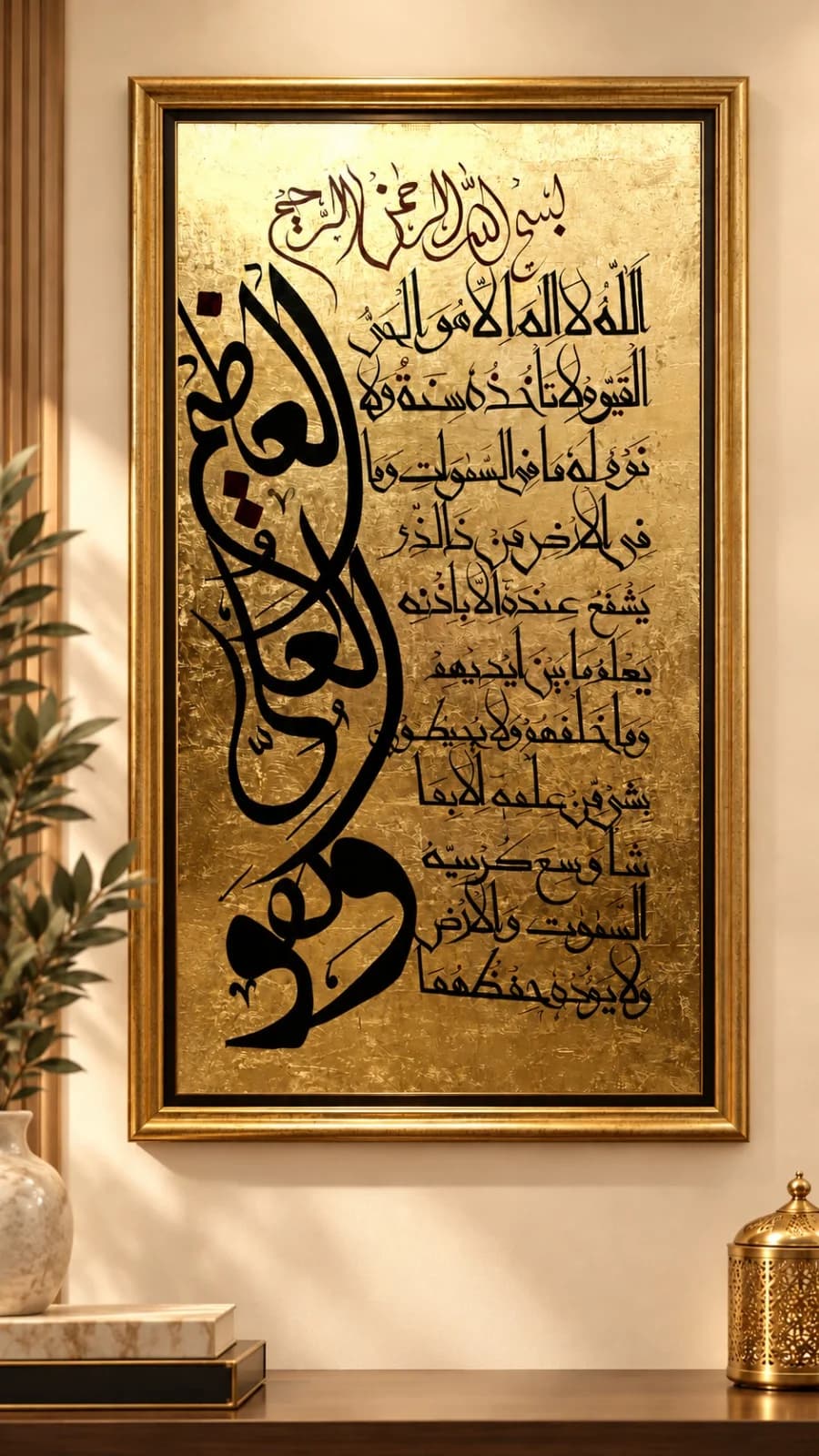
What the Throne Verse says line by line, the authentic narrations about it, and practical advice on choosing and placing an Ayatul Kursi painting.
The history and craft of Islamic calligraphy, the meaning behind the verses, and practical ideas for choosing, gifting, and caring for handmade artwork.
33 articles
What the Throne Verse says line by line, the authentic narrations about it, and practical advice on choosing and placing an Ayatul Kursi painting.
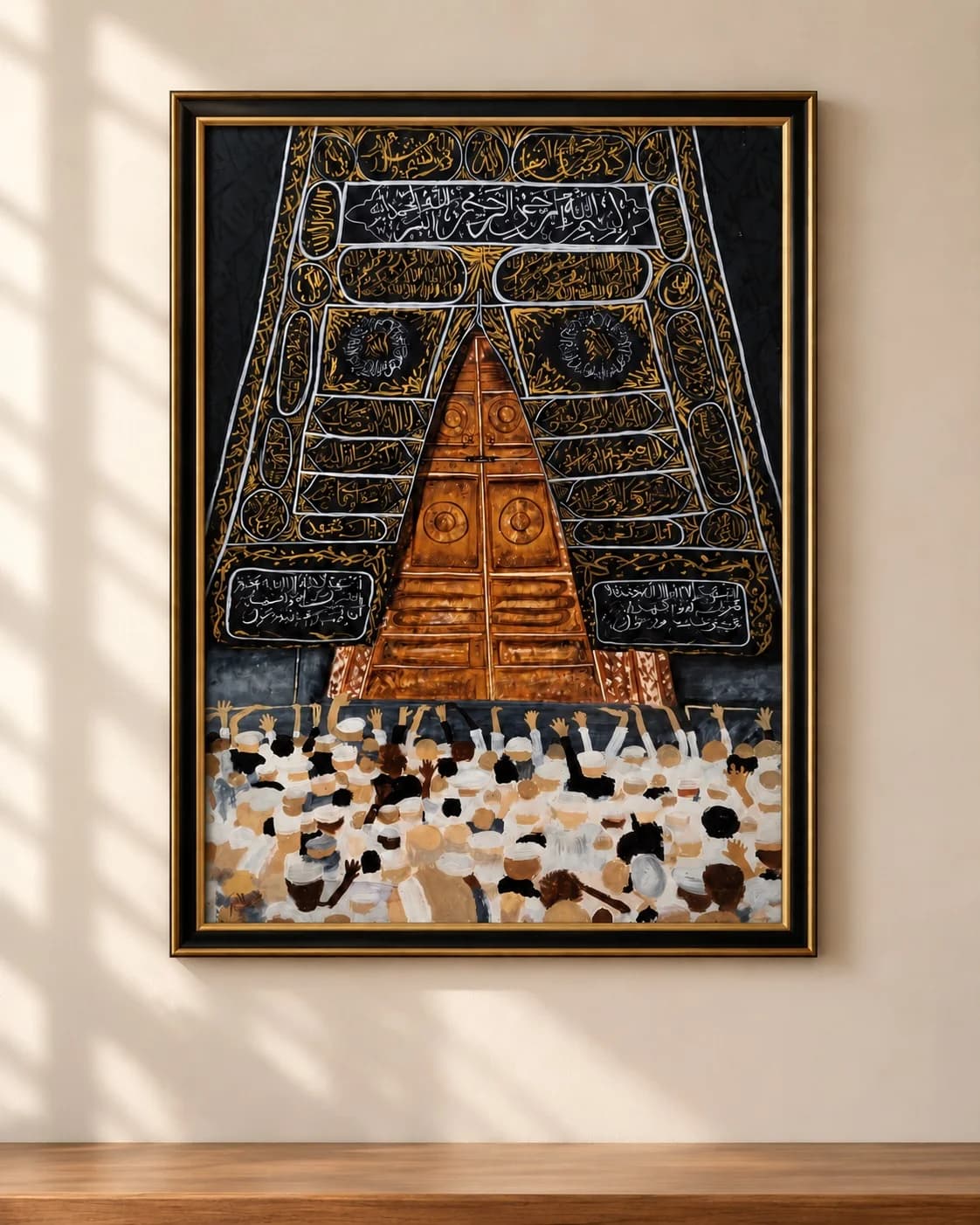
Black silk, gold thread and verses of the Quran: how the covering of the Kaaba is made, when it is replaced, and why artists return to it.
The same painting can look flat or glowing depending on the light. Bulb colour, angle, fittings and sunlight, explained simply.
Four short surahs that begin with the word Qul. What each one teaches, when the Prophet ﷺ recited them, and how they are arranged as wall art.
What to give a hajji that will last longer than sweets and dates: Kaaba and Madinah artwork, the verses of the pilgrimage, and practical buying advice.
Four terms that appear on every product page, what they mean for how a painting looks, hangs, ships and lasts.
Where the 99 Names come from, the three layouts artists use to fit them on one canvas, and what to check before you buy an Asma ul Husna painting.
The dome every Muslim recognises, the verses that speak of the Prophet ﷺ, and the calligraphy that is painted beside them.
Paint you can see the depth of. How texture is built, why it changes through the day, and how to look after it.
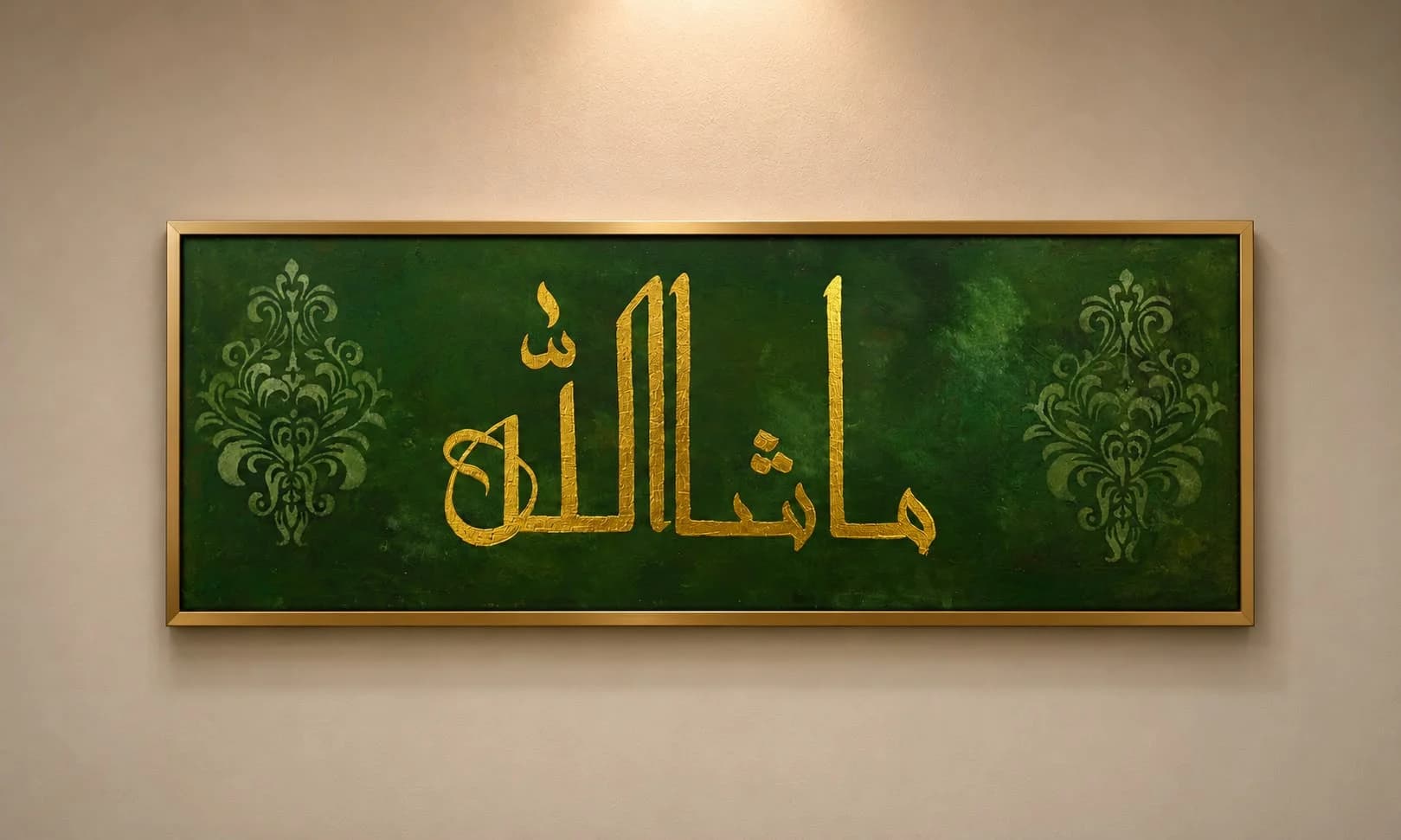
One word, four letters, and the most painted name in Islamic art. How calligraphers treat it, and how to choose and place it at home.
A complete surah on a single canvas. Five short surahs, what each one teaches in a few lines, and where each belongs.
Right to left, bottom to top, and sometimes in a circle. A plain guide to finding your way around a calligraphy painting.
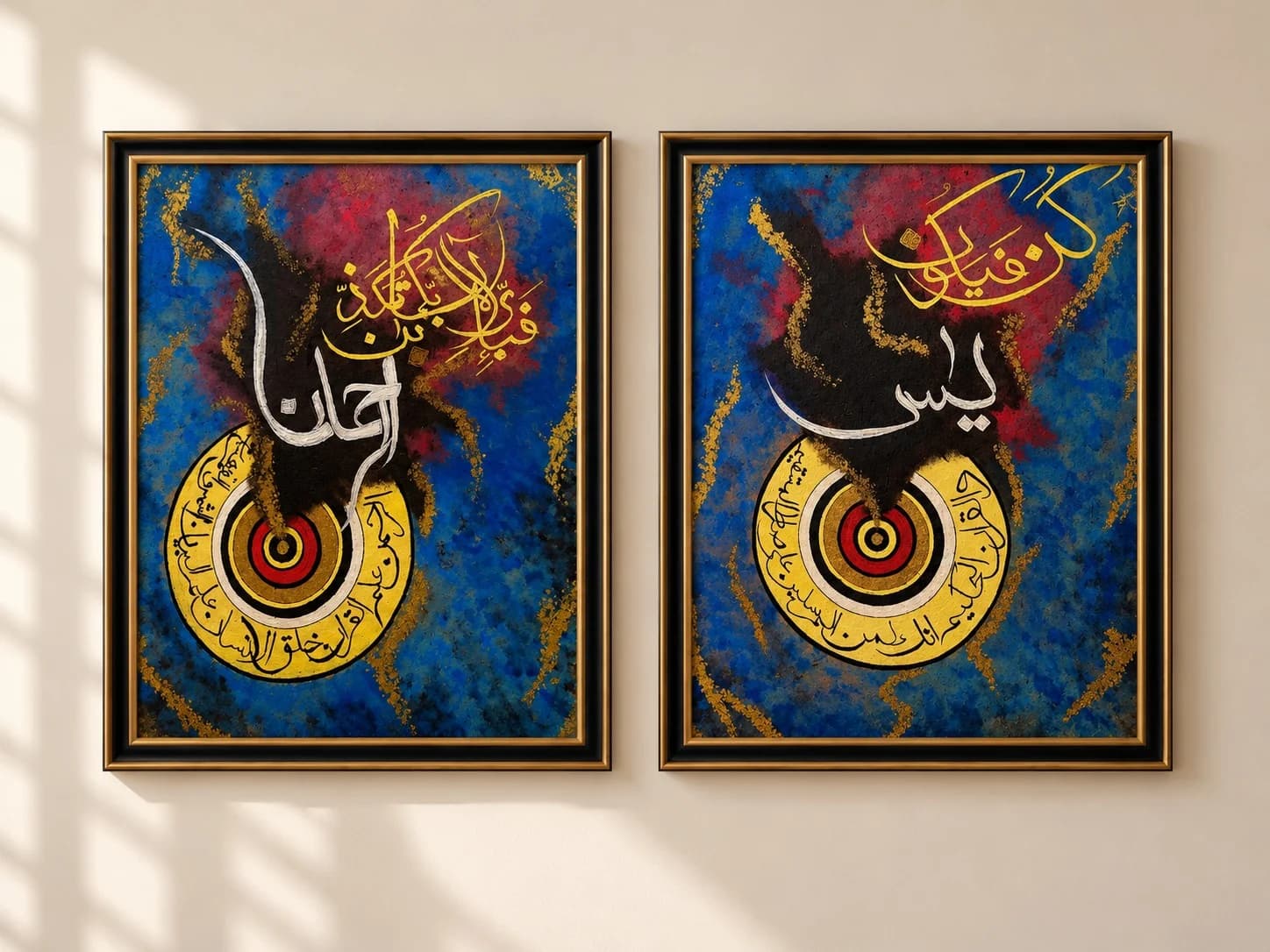
Two Arabic words that appear eight times in the Quran. What they mean, the stories they are tied to, and how to choose a Kun Fayakun painting.
Five colours with long histories in mosques, manuscripts and textiles, and what each one does on the wall of a home.
Two painters changed how a country sees the written word. A short history of calligraphic painting in Pakistan, and what it means for art you buy today.
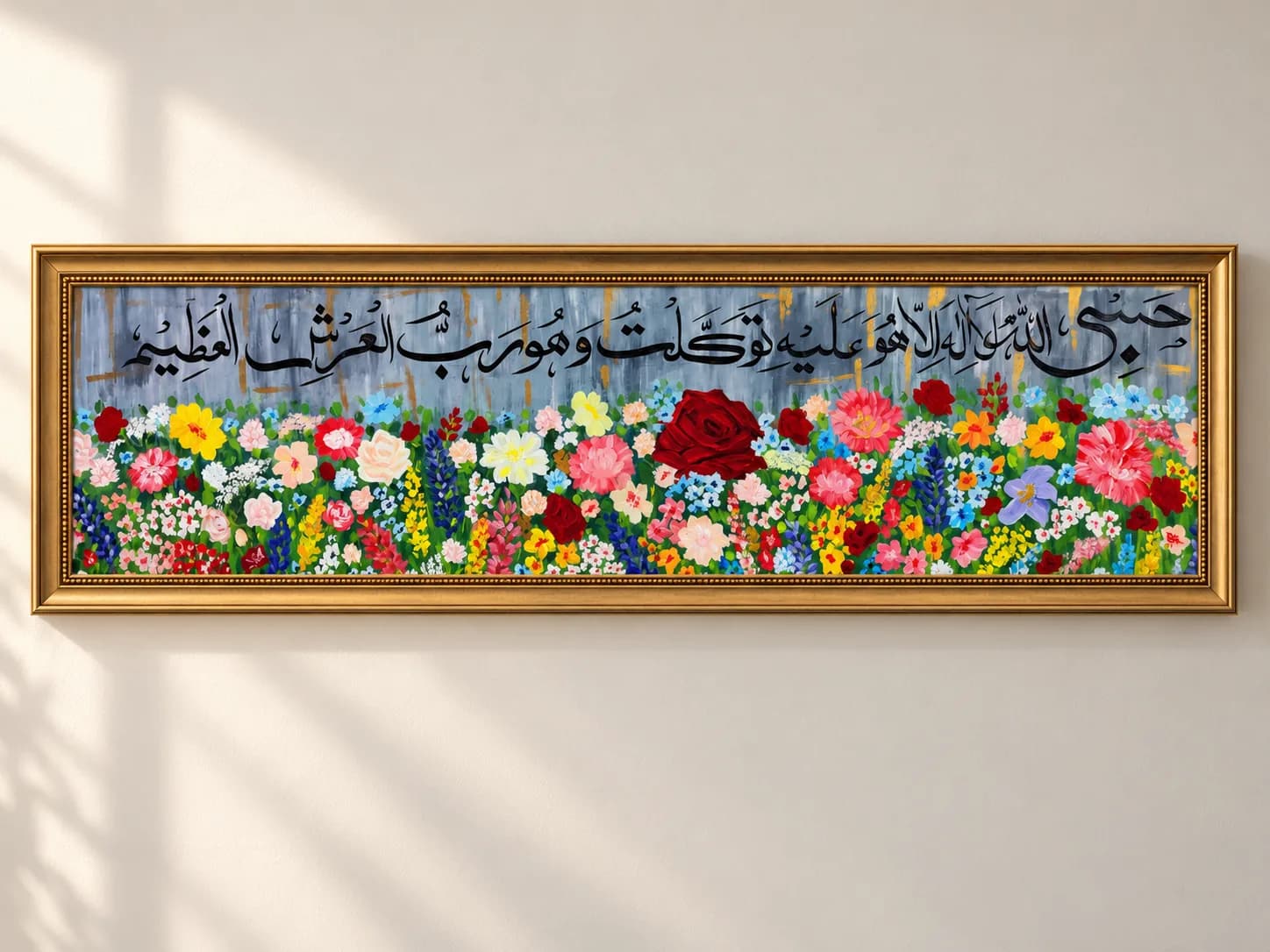
What tawakkul means, five verses that teach it, who said them and when, and how to choose one for your wall.
From scrolling vines on mosque walls to tulips on Ottoman tiles: a short history of flowers in Islamic art, and how to choose a floral piece today.
Small walls, no drilling, and a landlord who wants the deposit back. How to live with calligraphy anyway.
Eleven short verses revealed in a moment of sadness. What Surah Ad-Duha says, how it is built, and why it is chosen for bedrooms and gifts.
The right gap between panels, how to treat a set as one artwork, and a simple paper-template method that gets it straight the first time.
How an original painting gets from a studio in Pakistan to a wall in London, Toronto or Dubai, and what it costs along the way.
Seven verses every Muslim knows by heart. How the surah is built, what the Prophet ﷺ said about it, and the ways calligraphers present it.
A compass, a straight edge and a circle: how the star patterns of mosques and tilework are constructed, and why they sit so well beside calligraphy.
The dua the Quran teaches children to make for their parents, and five gift ideas that say thank you every day.
Why so much Islamic art shows waves, moons and flowers beside a verse, the verses most often chosen, and how to bring such a piece into a room.
The most formal palette in Islamic art, and the easiest to get wrong. Where black and gold works, what to pair it with, and how to light it.
Five verses for the wall of a workplace, what each one really says, and how to display them with dignity where customers come and go.
The words Musa said under a tree with nothing to his name, the prayer of Yunus in the dark, and five more duas the Quran preserves from its prophets.
How high, how far above the sofa, and which fixing for which wall. A practical guide to hanging a painting safely and straight.
Verses a child can grow up with, artwork that helps them learn, and the safety rules for hanging anything in a room where children sleep and play.
The Quran verses couples love most, the dua the Prophet ﷺ made for newlyweds, and how to choose a calligraphy gift that a new couple will treasure for years.
For over a thousand years gold has carried the words of the Quran, from the Blue Qur'an's gold letters on indigo to today's gilded canvases. The history, the craft, and how to care for gold leaf at home.
Many “hand-painted” canvases sold online are printed. Seven simple checks, from raking light to the canvas edges, show you what you are really paying for.
The journal tells stories from the studio; the Learning Centre answers practical questions. These are the most read guides, from the history of the art to choosing and caring for a piece.
From the first Quran manuscripts to Ottoman masters and Pakistan's modern calligraphy painters.
How Kufic, Naskh, Thuluth, Diwani, Nastaliq, and Ruq'ah differ and when to use each.
Popular verses and duas with exact Arabic, transliteration, meaning, and display ideas.
What scholars have said, the conditions they mention, and etiquette for displaying Quranic art.
Choose the right dimensions for your wall, room type, and visual balance.
Simple care steps to preserve quality, colour, and finish over time.
Every piece is painted by hand and checked in the studio before it is packed.
Wording, size and colours are agreed with you before any painting begins.
Each artwork is wrapped and protected to suit its size, framed or unframed.
Tracking is shared after dispatch, and we follow up with the courier for you.
Nothing is charged at checkout. Shipping is quoted and approved before you pay.
Message the studio directly for advice on wording, size, framing or delivery.
Listings describe the medium and surface, and the exact size is confirmed before you order.
From first message to delivery, you deal with the studio directly, not a call centre.