99 Names of Allah Wall Art: How to Read and Choose an Asma ul Husna Painting

Asma ul Husna means the Most Beautiful Names. A painting of them is unlike any other calligraphy piece: it holds ninety-nine separate words, each with its own meaning, and people tend to stand in front of it and read. This guide explains where the Names come from and how to choose a piece that is both correct and beautiful.
Where the Names come from
The Quran says that the most beautiful names belong to Allah and tells believers to call on Him by them (Al-A'raf 7:180). Many of the Names appear in the Quran itself. One famous passage, at the end of Surah Al-Hashr, lists several in a row:
“He is Allah, other than whom there is no deity, the Sovereign, the Pure, the Perfection, the Bestower of Faith, the Overseer, the Exalted in Might, the Compeller, the Superior. Exalted is Allah above whatever they associate with Him.” (Al-Hashr 59:23)
The Prophet ﷺ said: “Allah has ninety-nine names, one hundred less one. Whoever preserves them will enter Paradise” (Sahih al-Bukhari 2736; Sahih Muslim 2677). Scholars explain “preserving” them as learning them, understanding them and living by what they mean, not only counting them.
The list of ninety-nine that most artwork follows comes from a narration in Jami' at-Tirmidhi. Hadith scholars have long discussed whether the list is part of the Prophet's ﷺ words or was added by a narrator, which is why you will sometimes see small differences between lists. You can read the Names with their meanings on our Asma ul Husna page.
Three layouts artists use
- The grid. Each Name sits in its own square, often in a different colour, with the name Allah written large beside them. It is the easiest layout to read and to teach from. See the colourful 99 Names canvas.
- The mosaic or medallion. The Names fill shapes borrowed from Islamic tilework: stars, hexagons and lobed medallions. It looks rich and decorative from a distance. See the 99 Names mosaic canvas.
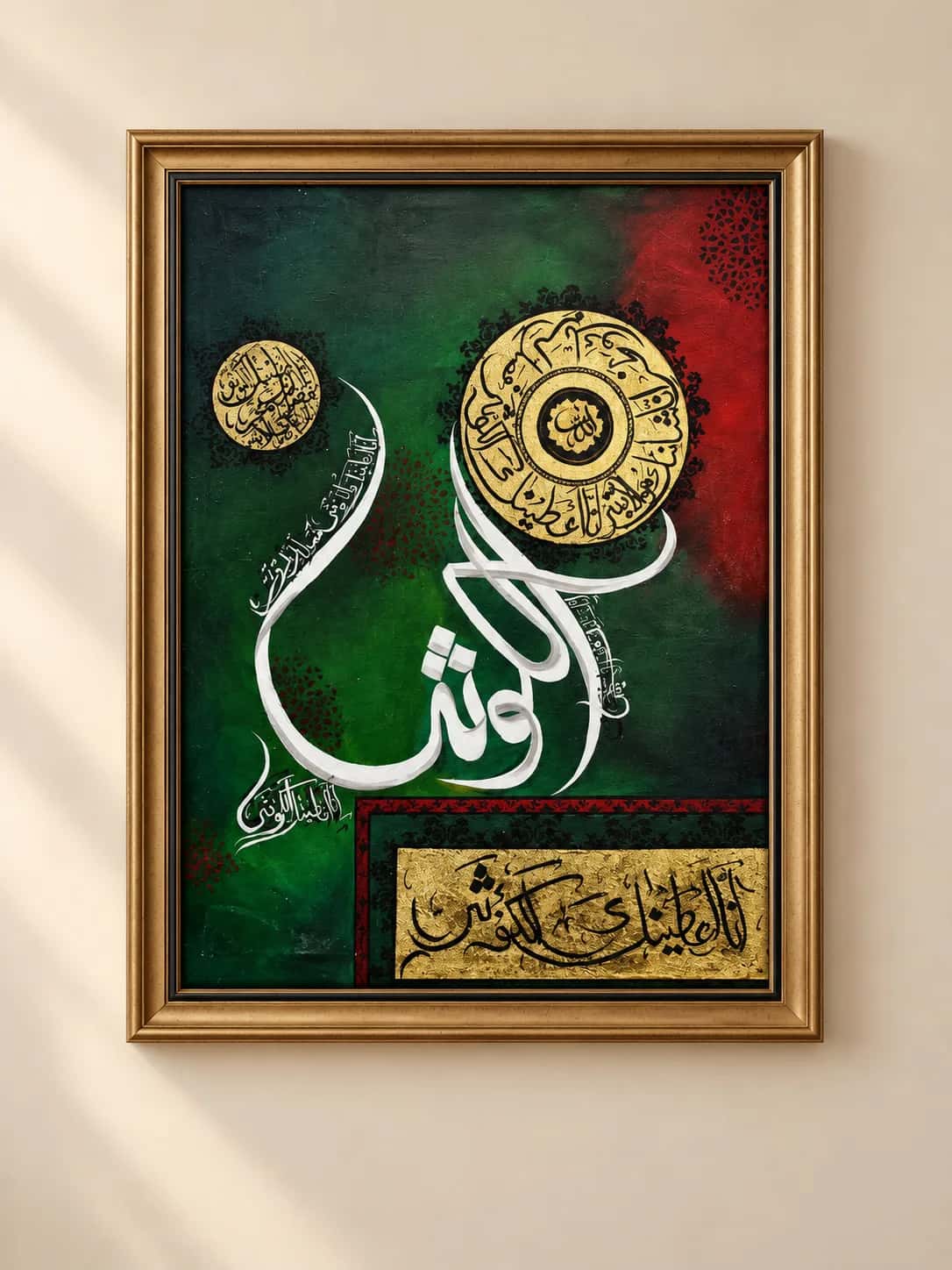
- A single Name. One Name, such as Al-Mu'min or Ar-Rahman, painted large. It suits a smaller wall or a gift chosen for what the Name means. See Al-Mu'min in green and gold.
A checklist before you buy
- Count them. A complete piece has ninety-nine Names plus the name Allah. Ask the seller to confirm the count.
- Check the spelling. With so many words, mistakes are possible. Ask for a sharp, straight photograph and compare a few Names against a trusted list.
- Mind the size. Ninety-nine words need space. If each Name is smaller than a fingertip, the piece will read as pattern, not as text. The size guide helps you match the canvas to the wall.
- Think about viewing distance. A grid invites people to come close, so hang it where they can: a living room, a study or a wide hallway, not above a deep piece of furniture.
Where it works best
These pieces are natural teaching tools, so family rooms and studies suit them well. Many parents use one to help children learn a few Names each week. For a quieter space, a single Name is often the better choice. Compare everything in 99 Names of Allah art and Asma ul Husna art, or read about the name that stands above all the others in our article on Allah calligraphy.
Sources
- Quran translation: Saheeh International, as shown in the InkByHand Verse Library.
- Sahih al-Bukhari 2736 and Sahih Muslim 2677.
Artwork in this article

99 Names of Allah Colorful Islamic Calligraphy Canvas
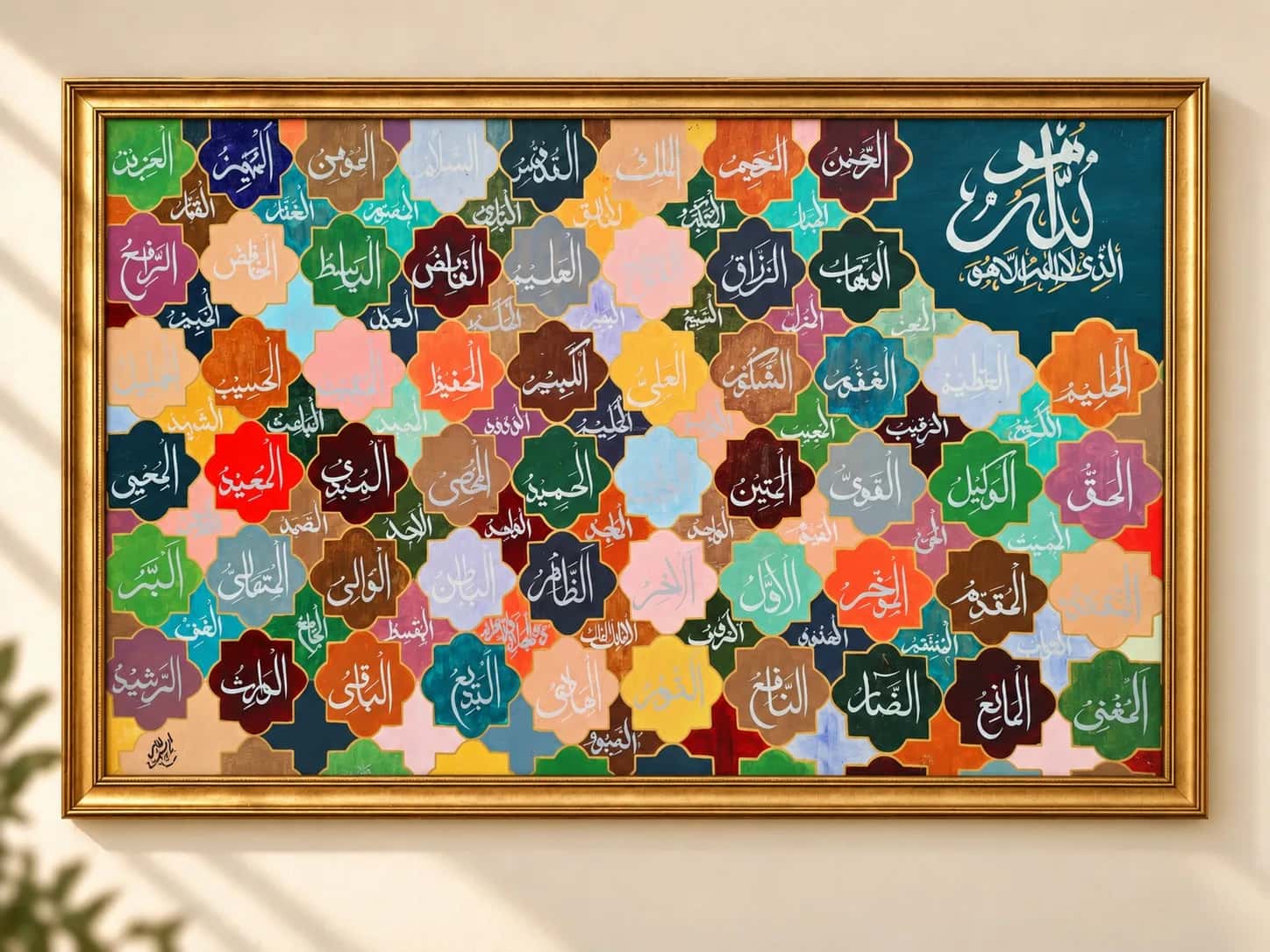
99 Names of Allah Mosaic Calligraphy Canvas