Sea, Moon and Garden: Nature as a Sign in Islamic Art

The Arabic word ayah means both a verse of the Quran and a sign in the world. The Quran uses it both ways, pointing again and again to the sky, the sea, rain, plants and the alternation of night and day as signs for people who think. That double meaning explains a whole kind of Islamic art: a verse written over the very thing it speaks about.
The sea
Surah Ar-Rahman lists the blessings of creation, among them the two seas that meet, the pearls and coral that come from them, and the ships that sail on them. After each group of blessings it asks the same question:
“So which of the favors of your Lord would you deny?” (Ar-Rahman 55:13)
A painting that sets this verse above a shoreline lets the image do the answering. See the Fabi Ayyi Ala ocean and seashell canvas, read the Surah Rahman wall art guide, or browse ocean-inspired Islamic art.
The sun and the moon
The same surah says the sun and the moon move by precise calculation, and a few verses later it describes Allah like this:
“[He is] Lord of the two sunrises and Lord of the two sunsets.” (Ar-Rahman 55:17)
Commentators explain the two sunrises and two sunsets as the furthest points the sun reaches on the horizon in summer and in winter. Paired with a painted moon, the verse becomes a quiet piece about order and time. See the Rabbul Mashriqain moon canvas and the verse page.
Light
The Verse of Light describes Allah's light through a carefully built image: a niche, a lamp, glass like a shining star, and oil from a blessed olive tree. It has inspired mosque lamps and prayer niches for centuries.
Read it in full on the Ayat an-Nur page. In a painting it suits warm golds against a dark ground, so that the lettering itself seems lit.
The garden
The Quran's word for Paradise, jannah, means garden, and it is described with shade, flowing water and fruit. This is why flowers and vines run through Islamic art, from tilework to carpets. On a canvas, a verse above a meadow or between flowering branches follows the same tradition. Read more in our article on floral Islamic art and browse Islamic floral art.
Verses often paired with a scene
- Fabi ayyi ala'i Rabbikuma tukadhiban: with the sea, a garden or a sky.
- Rabbul mashriqayni wa Rabbul maghribayn: with the moon, the sun or a horizon.
- Ayat an-Nur: with a lamp, a niche or rays of light.
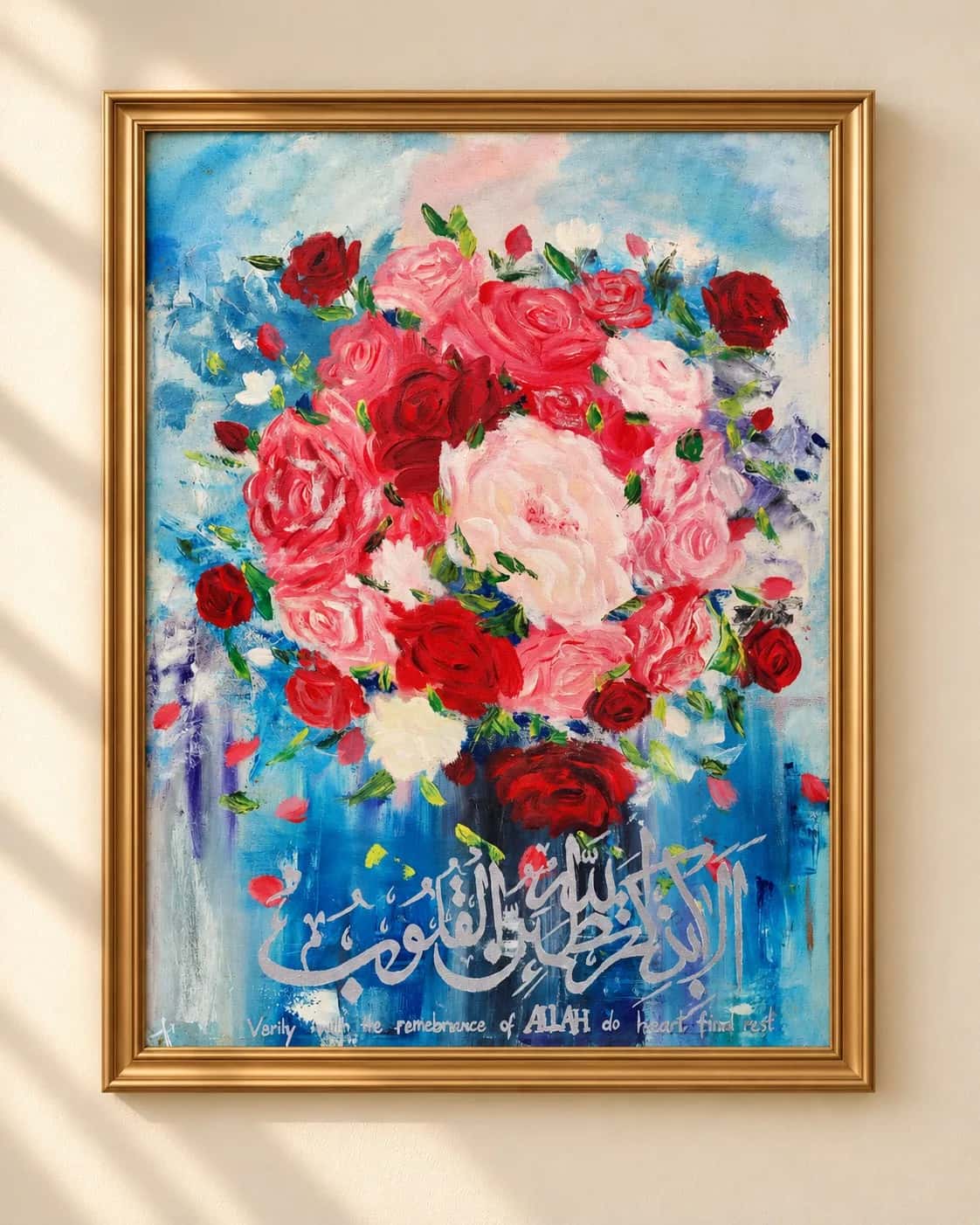
- Ala bi dhikrillahi tatma'innul qulub: with flowers and calm water. See the Remembrance of Allah floral canvas.
Bringing a nature piece into a room
- Let the scene set the palette. Sea pieces bring blue, turquoise and sand; garden pieces bring green and warm colour. Repeat one of those colours in cushions or a rug.
- Give texture some light. Raised waves, shells and thick paint look best with light falling from the side. See our guide to textured art.
- Keep the verse readable. The scene should support the words, not bury them. Look for clear lettering on the calmest part of the painting.
- Choose the room by mood. Sea and moon pieces are calm and suit bedrooms and reading corners; bright gardens suit living and dining rooms.
Not sure which suits your wall? The Artwork Finder asks three questions and suggests pieces to match.
Sources
- Quran translation: Saheeh International, as shown in the InkByHand Verse Library.
Artwork in this article
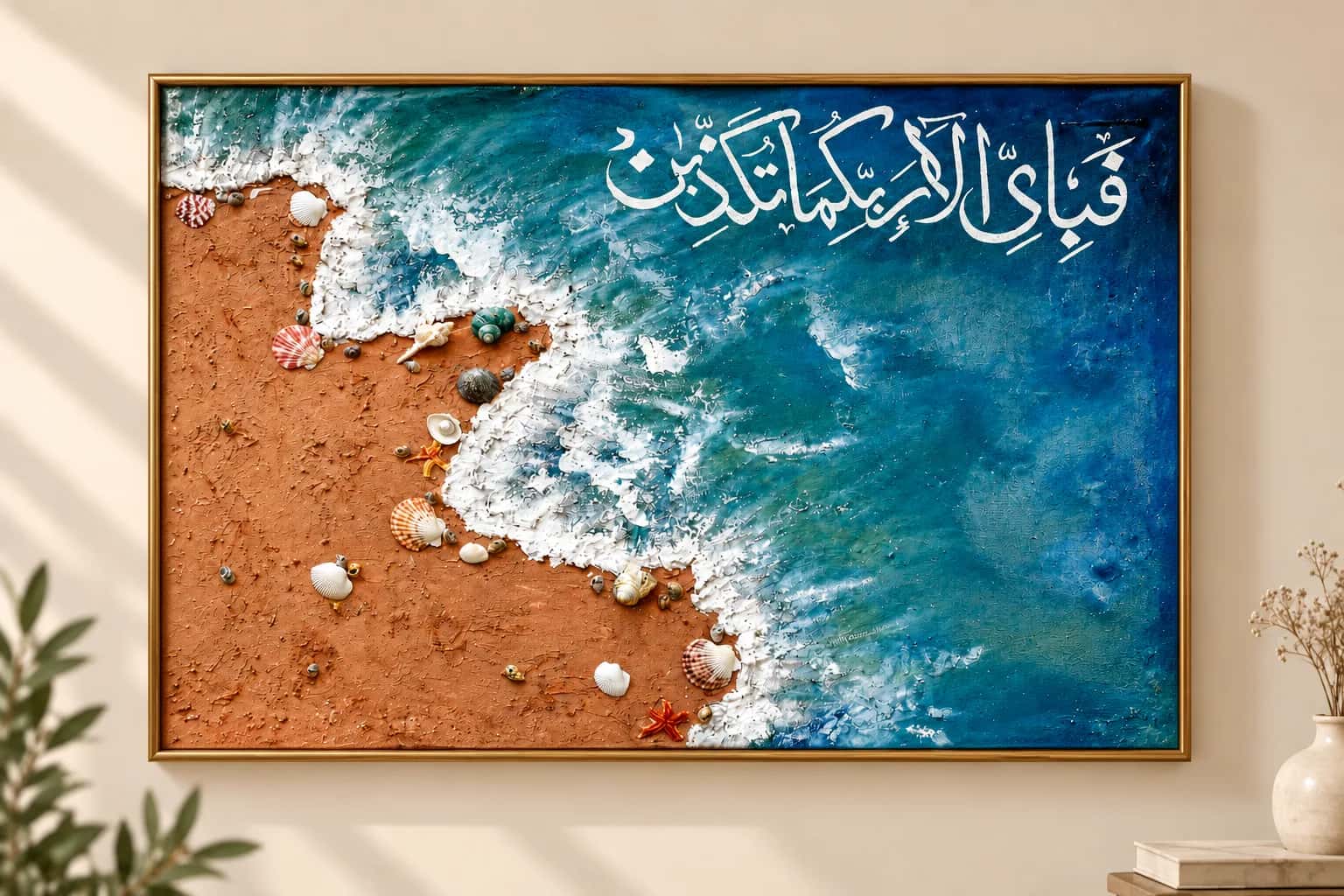
Fabi Ayyi Ala Ocean & Seashell Islamic Canvas Art

Rabbul Mashriqain Moon Islamic Calligraphy Canvas