The Green Dome, Madinah and Salawat in Art

If the Kaaba is the image of Makkah, the Green Dome is the image of Madinah. It rises above the Prophet's Mosque, Masjid an-Nabawi, over the place where the Prophet Muhammad ﷺ is buried. For Muslims everywhere it stands for love of the Prophet ﷺ and longing for his city, which is why it appears on so many walls.
A short history of the dome
The first dome over the chamber was built of wood in the late thirteenth century, during Mamluk rule. It was rebuilt and repaired several times over the following centuries, and historical accounts record that it was first painted green in 1837, under the Ottomans. The colour has stayed ever since, and gave the dome its name.
Verses about the Prophet ﷺ
Two verses are painted with the Green Dome more often than any others. The first describes why he was sent:
“And We have not sent you, [O Muhammad], except as a mercy to the worlds.” (Al-Anbiya 21:107)
Rahmatan lil-alamin, a mercy to the worlds, is one of the best-loved descriptions of the Prophet ﷺ. See the Rahmatan Lil Alameen canvas and the verse page.
The second is the verse that tells believers to send blessings on him:
“Indeed, Allah confers blessing upon the Prophet, and His angels [ask Him to do so]. O you who have believed, ask [Allah to confer] blessing upon him and ask [Allah to grant him] peace.” (Al-Ahzab 33:56)
What salawat is
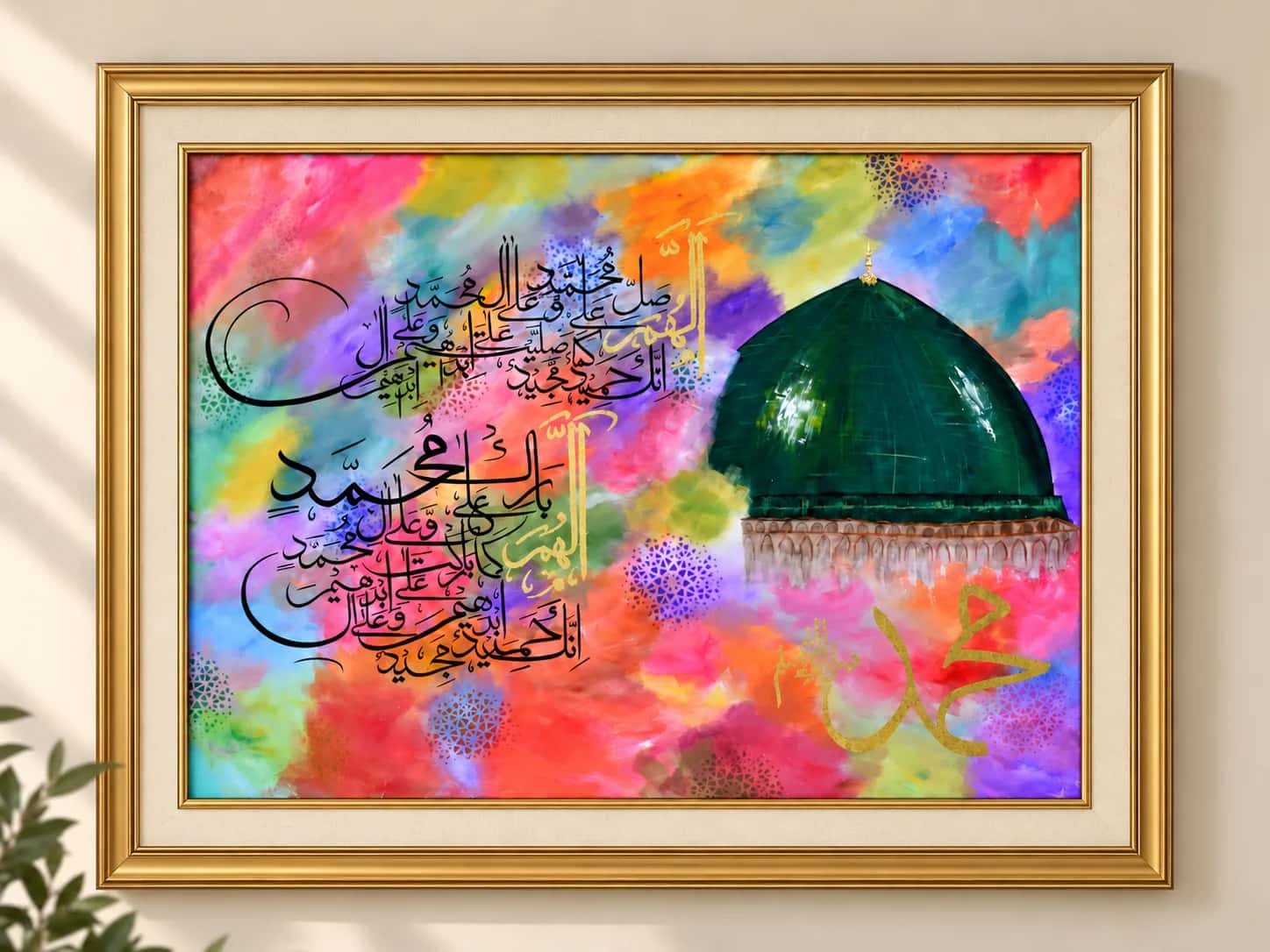
Salawat, called durood in Urdu, is the prayer of blessing and peace upon the Prophet ﷺ. He said: “Whoever sends blessings upon me once, Allah will send blessings upon him ten times” (Sahih Muslim 408). The short form, sallallahu alayhi wa sallam, is what the small calligraphic mark after his name stands for. Longer forms are painted as full compositions; see the Green Dome and Salawat canvas and the verse page.
The name Muhammad ﷺ in calligraphy
The name itself, written in gold or bold black, is one of the oldest subjects in Islamic calligraphy, and is often hung as a pair with the name Allah. By convention the name Allah goes on the right as you face the wall. Read more in our article on Allah calligraphy.
Choosing a Madinah piece
- Realistic or expressive. Some paintings show the dome and minaret carefully; others suggest them with loose, colourful brushwork and let the calligraphy lead. The second kind suits modern rooms.
- Green and gold, or full colour. Green and gold is traditional and calm. Pieces with pink, orange and blue skies are joyful and bring energy to a plain wall. See the Green Dome and Muhammad ﷺ canvas.
- Check the lettering. Ask which verse or salawat is written, and compare it with a trusted source before hanging.
Where to hang it
Living rooms and family sitting rooms are the usual place, where the piece can be seen by guests during gatherings and in the month of Rabi al-Awwal. It also makes a moving gift for someone returning from Umrah; see gift ideas for a returning pilgrim. Browse Masjid Nabawi art and Prophetic calligraphy art for more.
Sources
- Quran translation: Saheeh International, as shown in the InkByHand Verse Library.
- Sahih Muslim 408.
- Wikipedia: Green Dome (dates of construction and painting).
Artwork in this article
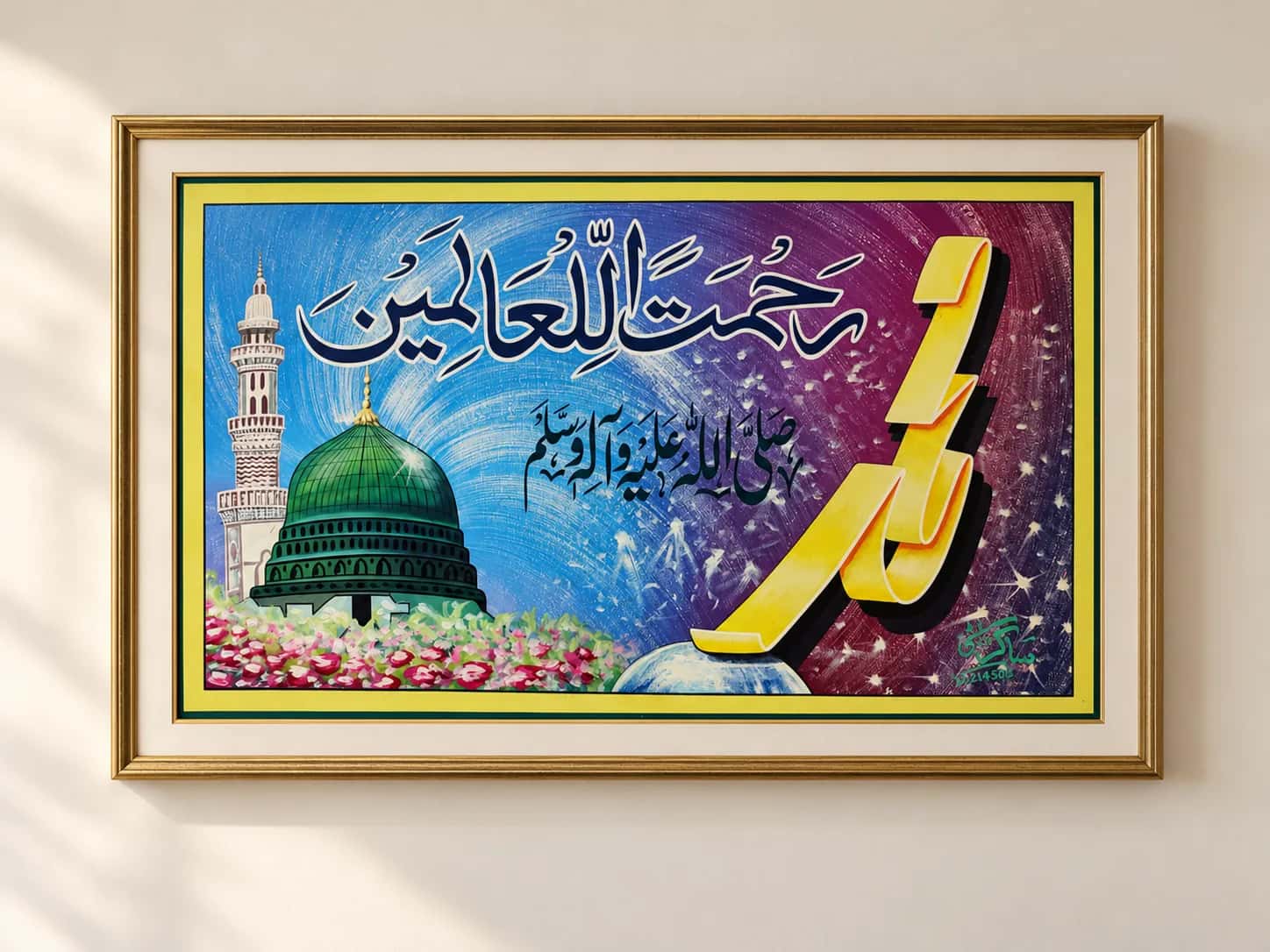
Rahmatan Lil Alameen Green Dome Islamic Canvas
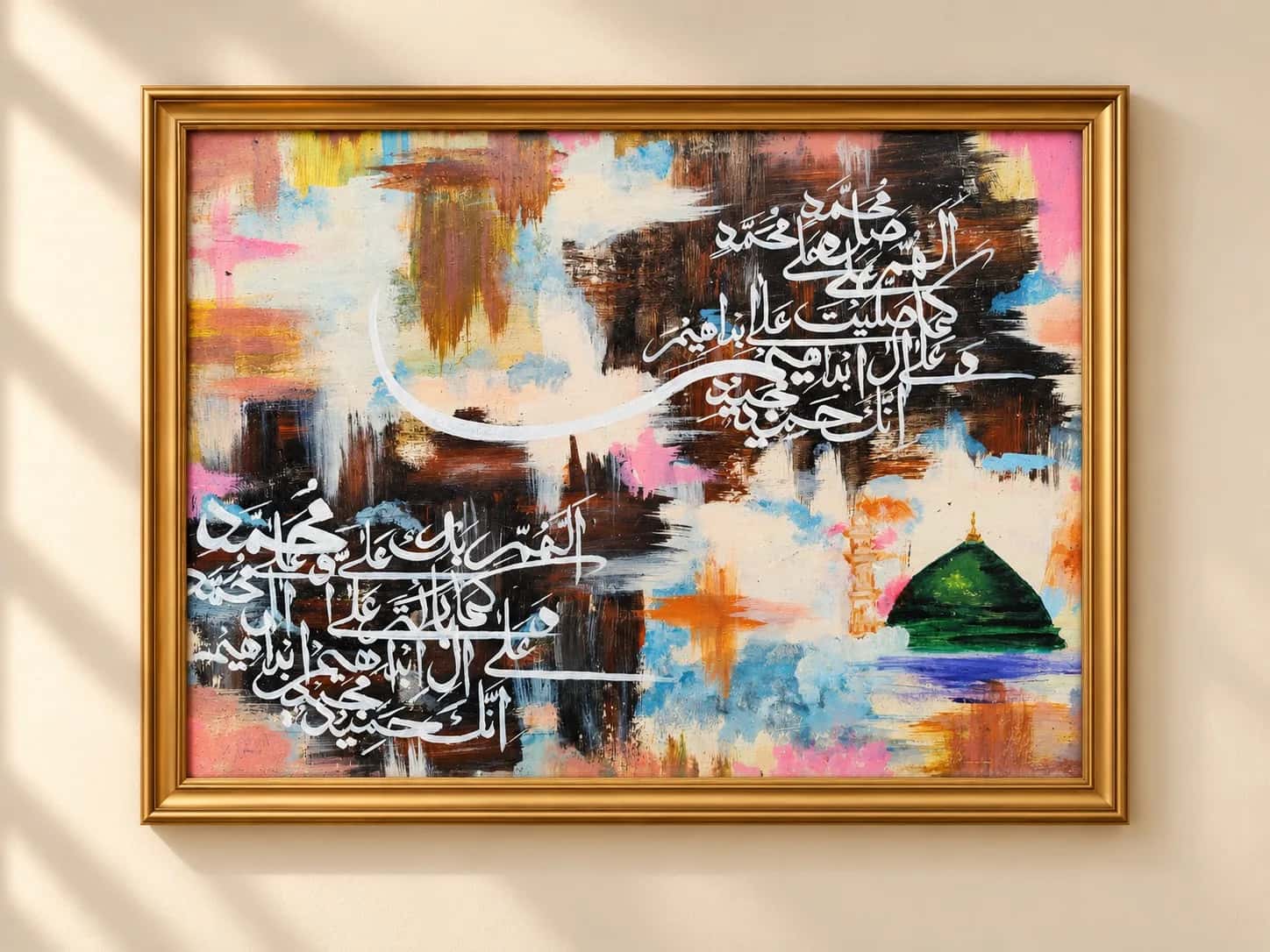
Green Dome Salawat Abstract Islamic Canvas