Why Flowers? Floral Motifs and the Arabesque in Islamic Art

Alongside calligraphy and geometry, plant ornament is one of the three great languages of Islamic art. Vines scroll across the walls of mosques, flowers fill the borders of Quran pages, and whole gardens are woven into carpets. A floral canvas on a living room wall belongs to that long tradition.
The arabesque
The best-known form is the arabesque, called islimi in Persian and Turkish: a stem that curls, splits and curls again, sprouting leaves and blossoms in a rhythm that could continue for ever. Early Muslim artists inherited scrolling vine patterns from the late Roman and Persian worlds and gradually made them more abstract, until the plant became pure pattern. Because it has no clear beginning or end, the arabesque is often read as a picture of endless growth.
Real flowers arrive
Later courts brought recognisable flowers back. Ottoman artists of the sixteenth century filled tiles, textiles and manuscripts with tulips, carnations, roses and hyacinths. In Mughal India, flowering plants were carved in marble and inlaid with coloured stone, most famously at the Taj Mahal. The rose came to carry special meaning in poetry and devotion across the Persian-speaking world and South Asia.
Two flowers with special meaning
- The tulip. In Ottoman Turkish the word for tulip, lale, is written with the same letters as the name Allah. For that reason the tulip was treated as a flower of devotion and appears constantly in Ottoman art.
- The rose. In Persian, Turkish and Urdu devotional poetry the rose is associated with the Prophet Muhammad ﷺ, and it is the flower most often painted beside verses about love and remembrance.
The garden behind the flowers
The deepest reason for all these plants is the garden. The Quran's word for Paradise, jannah, means garden, described with shade, fruit and flowing water. A flowering border around a verse is a small reminder of that promise. Surah Ar-Rahman, which describes two gardens in detail, returns again and again to one question:
“So which of the favors of your Lord would you deny?” (Ar-Rahman 55:13)
Floral calligraphy today
- A verse above a meadow. The words sit in the sky and a painted garden fills the lower half. See the Hasbiyallahu emerald meadow canvas.
- Roses with a verse of the heart. The Remembrance of Allah floral canvas pairs red and pink roses with the verse about hearts finding rest.
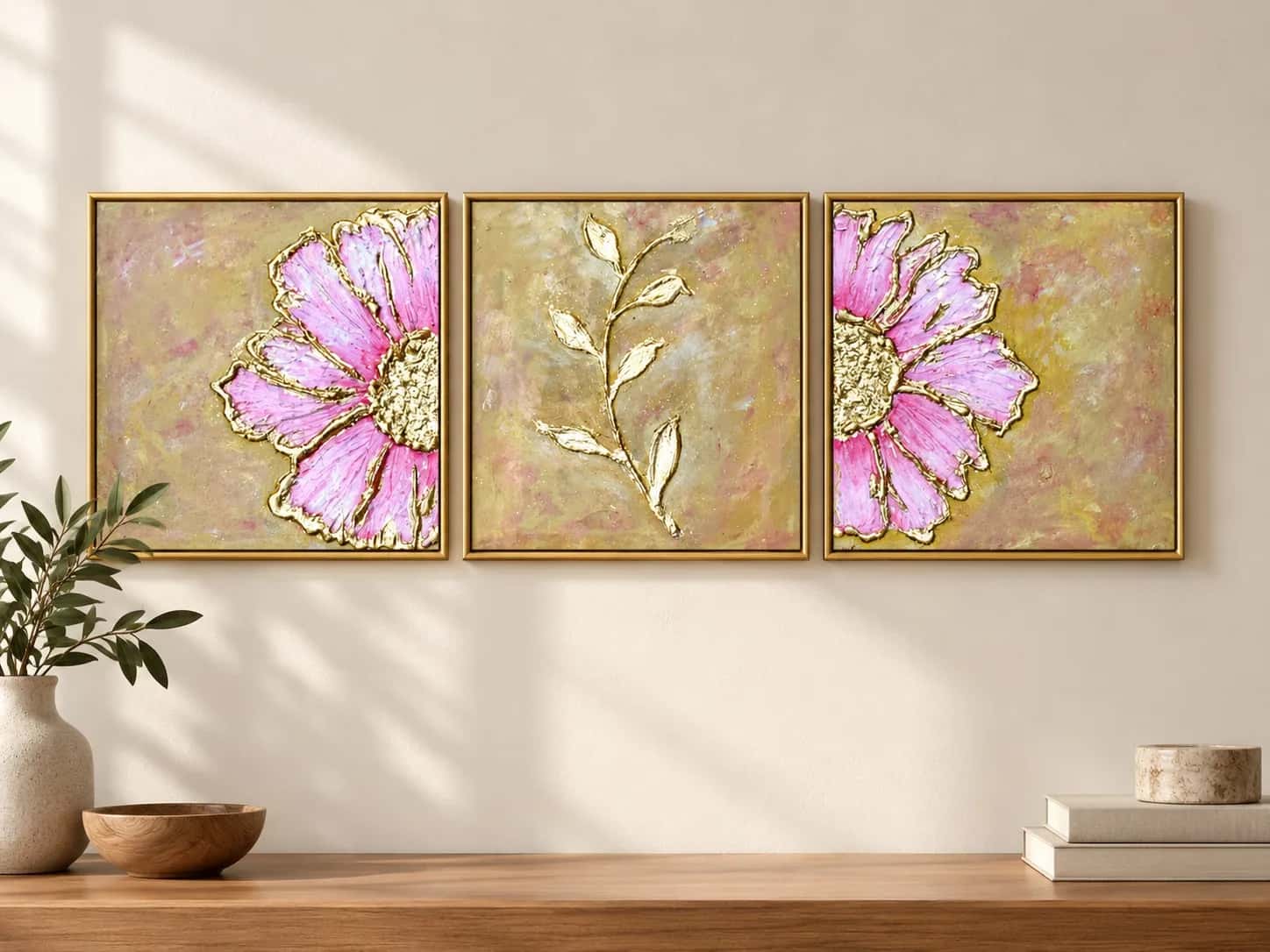
- Flowers alone. Some pieces carry no text at all and are chosen purely as decoration: the Midnight Peony black and gold canvas and the Blush Bloom triptych.
Choosing a floral piece
- With or without a verse. A floral piece with Quranic text needs a respectful place, like any verse. A purely floral piece can go anywhere, including dining rooms and hallways where you might hesitate to hang a verse.
- Soft or dramatic. Blush, cream and sage are gentle and suit bedrooms. Dark grounds with gold outlines are dramatic and suit dining rooms and formal lounges.
- One large or several small. Flowers repeat well. Two or three matching canvases often look better than one. See how to hang multi-panel art.
- Texture. Raised petals and outlined leaves catch the light; read our guide to textured art.
Browse Islamic floral art, floral wall art and botanical wall art, or read how sea and sky are used in the same way in nature as a sign in Islamic art.
Sources
- Quran translation: Saheeh International, as shown in the InkByHand Verse Library.
- Wikipedia: Arabesque.
Artwork in this article
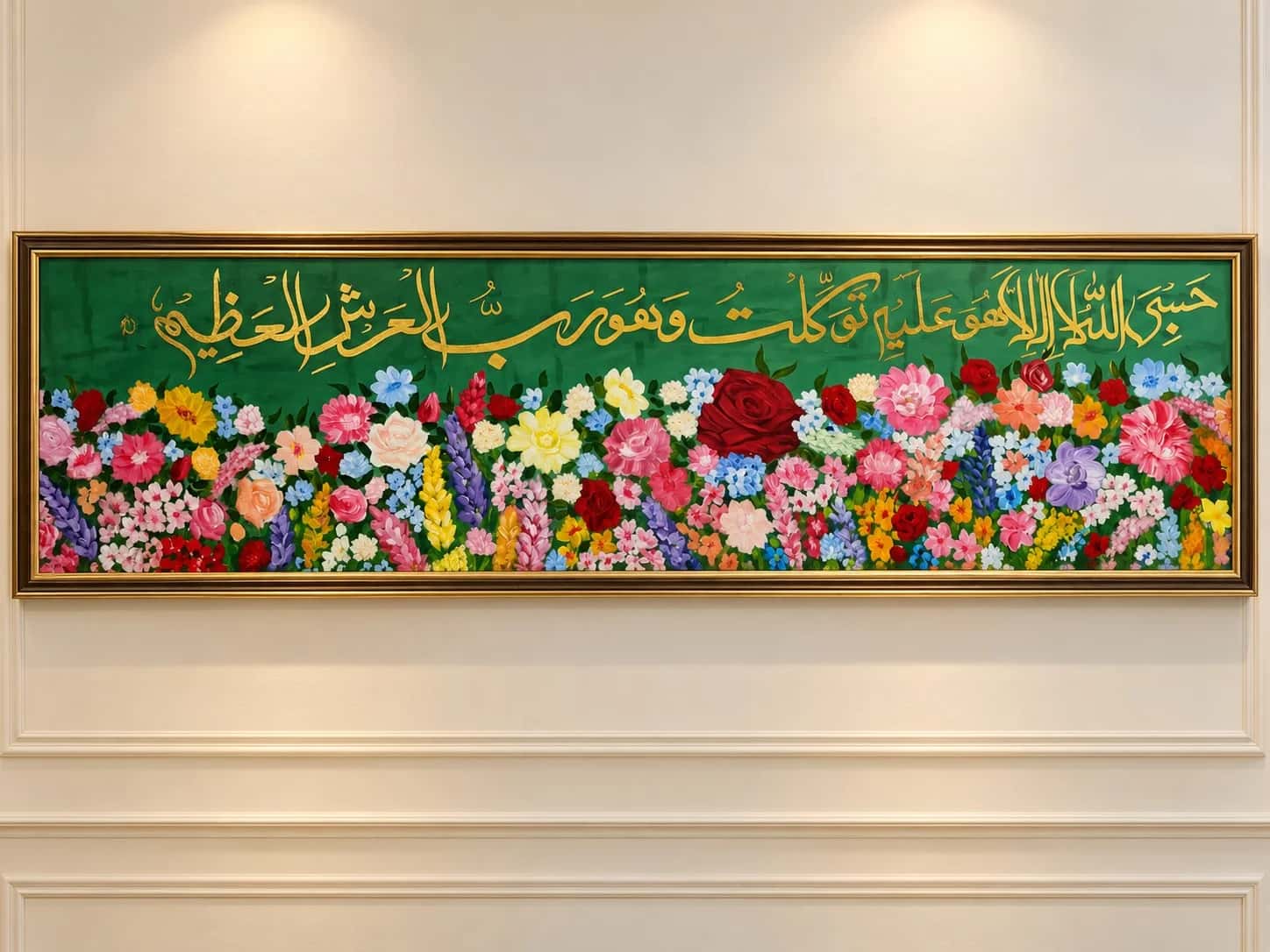
Hasbiyallahu Emerald Floral Meadow Canvas
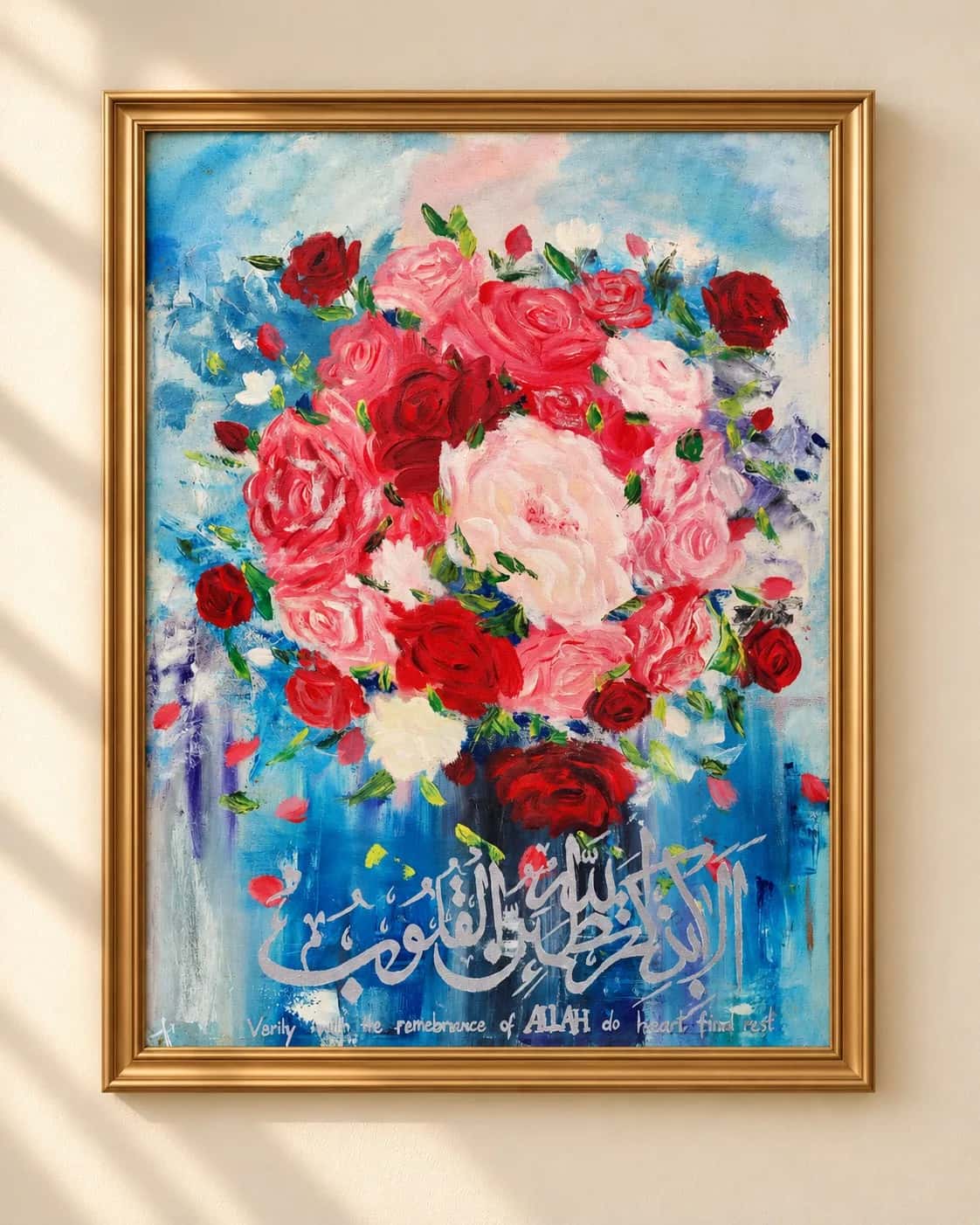
Remembrance of Allah Floral Quran Verse Canvas
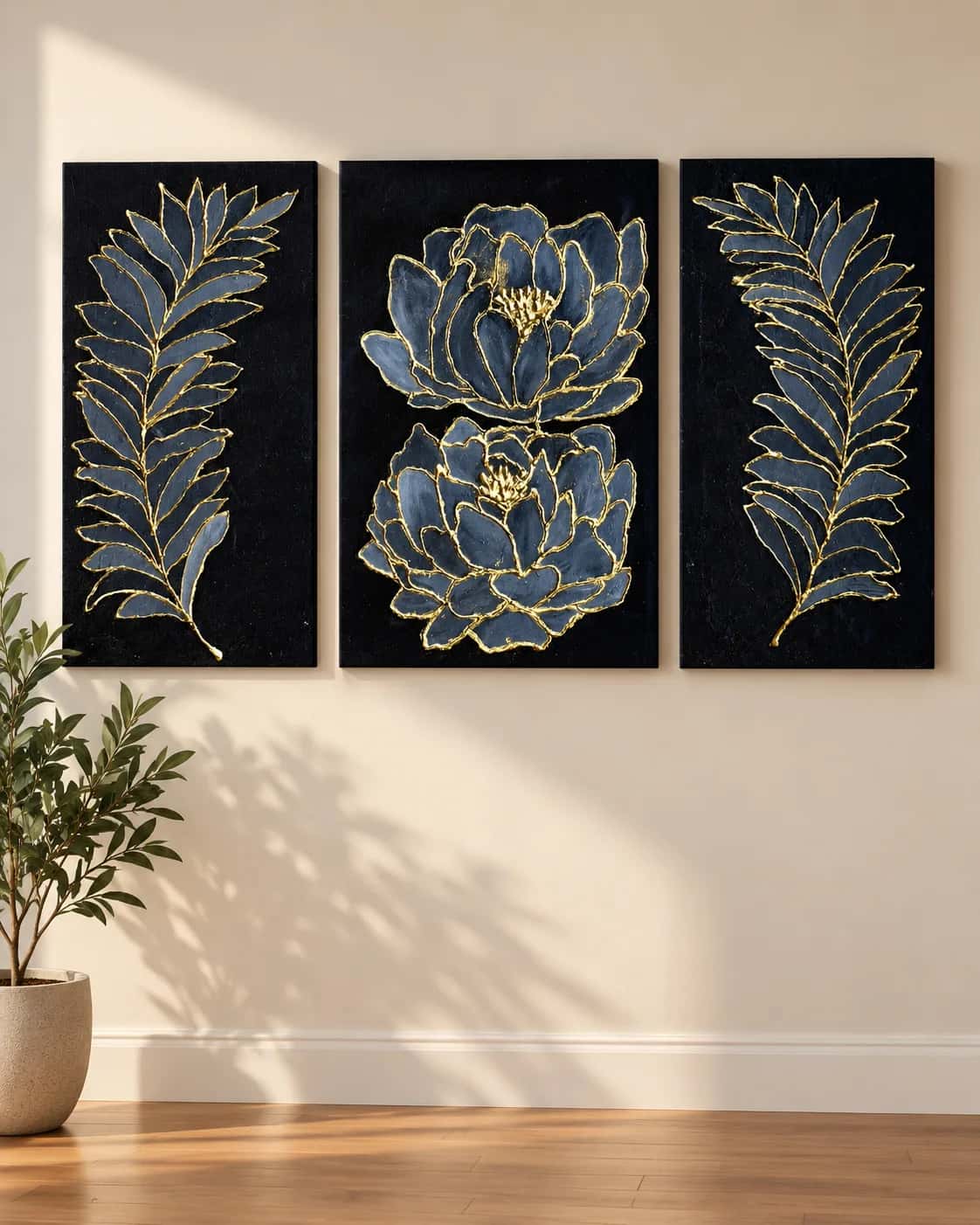
Midnight Peony Black & Gold Floral Canvas Painting