Tawakkul: Five Quran Verses About Trusting Allah, and How to Display Them
Tawakkul is usually translated as trust in Allah or reliance on Him. It does not mean doing nothing. A man once asked the Prophet ﷺ whether he should tie his camel and trust in Allah, or leave it loose and trust in Allah. The answer was: “Tie it and rely upon Allah” (Jami' at-Tirmidhi 2517). Tawakkul is what the heart does after the hands have done their part. These five verses teach it.
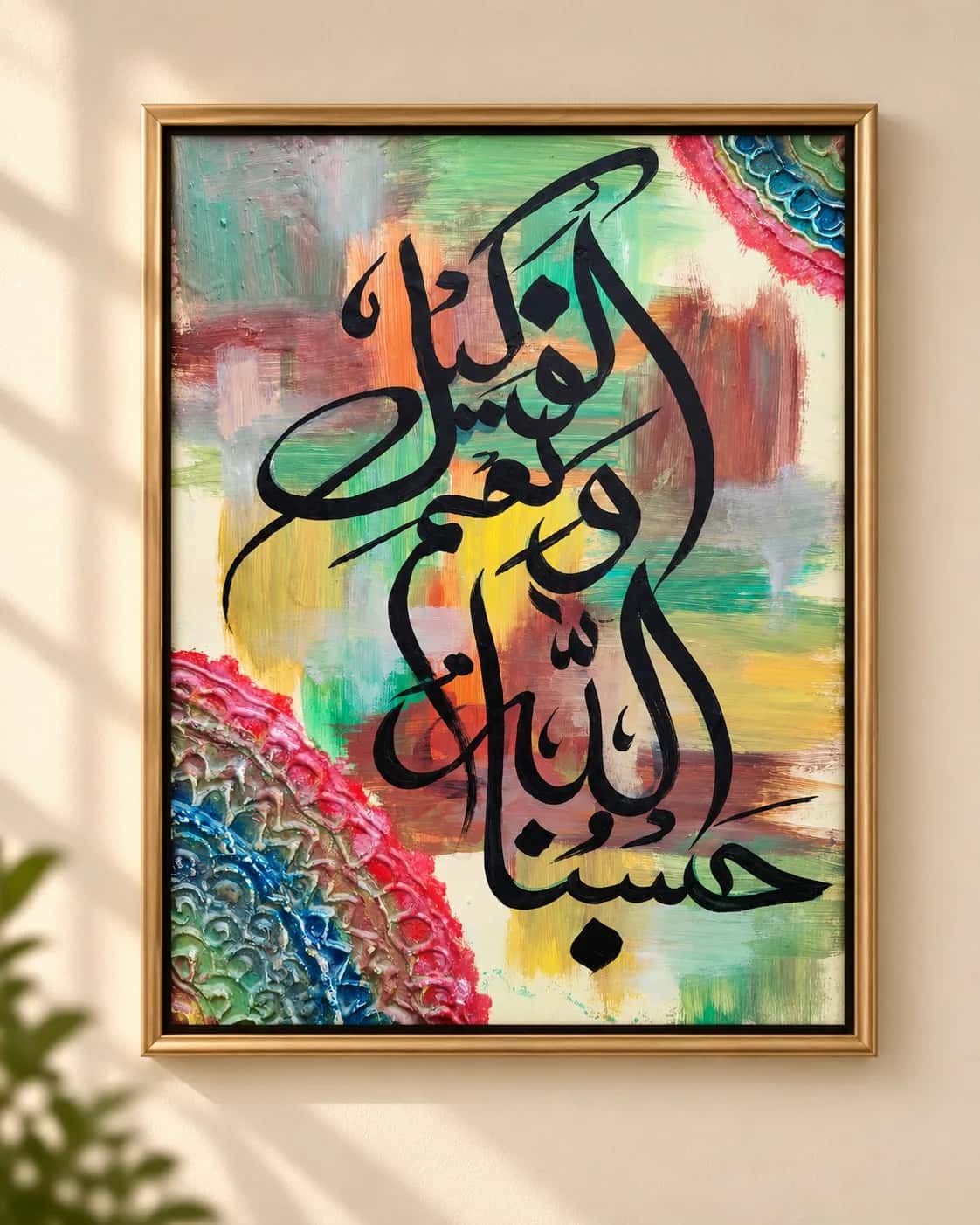
1. Hasbunallahu wa ni'mal wakil
“Those to whom hypocrites said, "Indeed, the people have gathered against you, so fear them." But it [merely] increased them in faith, and they said, "Sufficient for us is Allah, and [He is] the best Disposer of affairs."” (Aal Imran 3:173)
The believers said this when they were warned that an army had gathered against them. Ibn Abbas reported that the same words were said by Ibrahim, peace be upon him, when he was thrown into the fire, and by Muhammad ﷺ on that day (Sahih al-Bukhari 4563). Read the verse.
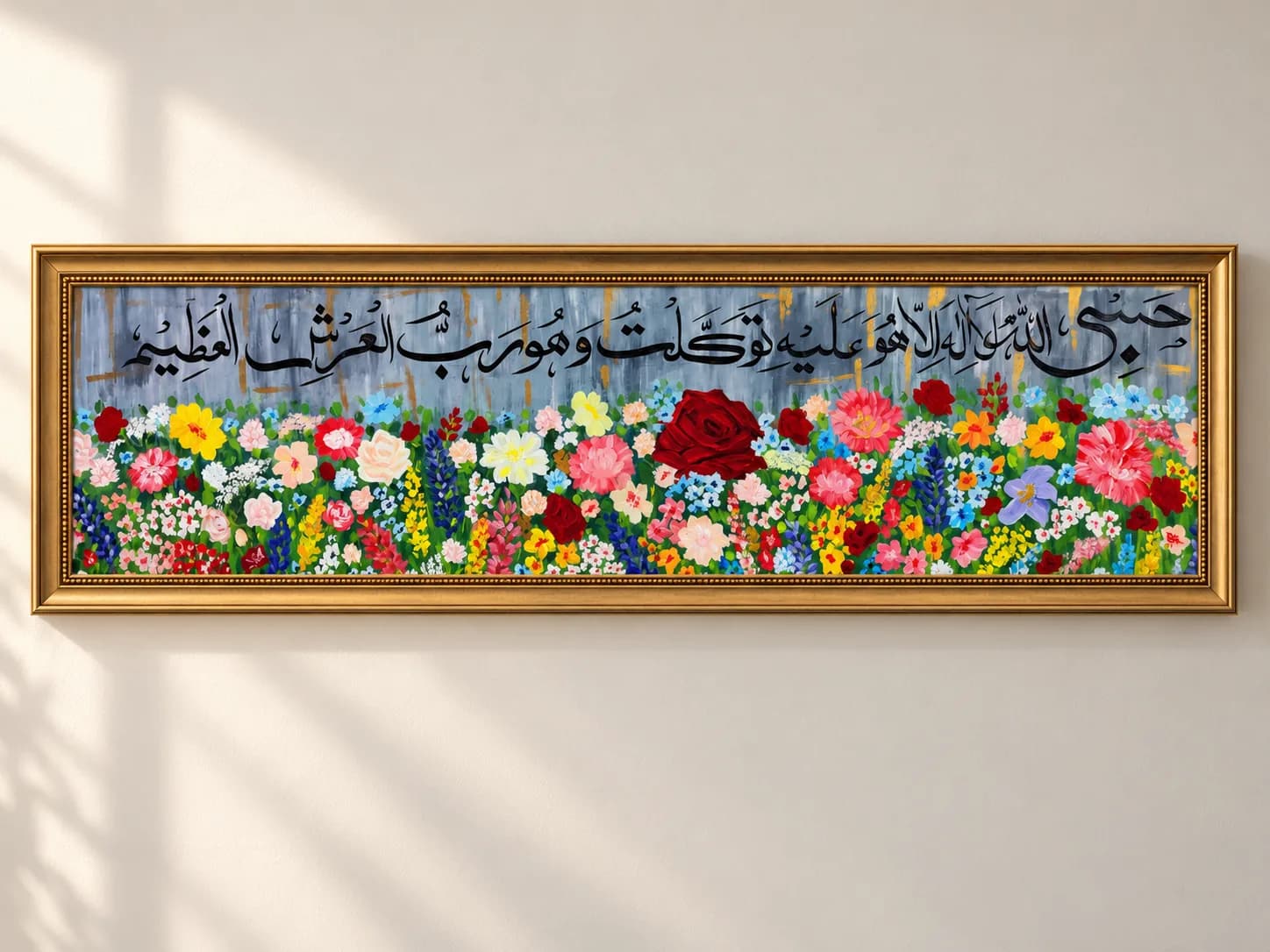
2. Hasbiyallahu la ilaha illa Hu
“But if they turn away, [O Muhammad], say, "Sufficient for me is Allah; there is no deity except Him. On Him I have relied, and He is the Lord of the Great Throne."” (At-Tawbah 9:129)
The final verse of Surah At-Tawbah turns the same idea into a personal statement: Allah is enough for me. It is one of the most painted verses of trust; see the Hasbiyallahu floral garden canvas. Read the verse.
3. Wa man yatawakkal alallahi fahuwa hasbuh
“And will provide for him from where he does not expect. And whoever relies upon Allah - then He is sufficient for him. Indeed, Allah will accomplish His purpose. Allah has already set for everything a [decreed] extent.” (At-Talaq 65:3)
This verse links trust with provision “from where he does not expect”. It is often chosen by people starting a business or supporting a family on an uncertain income. Read the verse.
4. Wa ufawwidu amri ilallah
“And you will remember what I [now] say to you, and I entrust my affair to Allah. Indeed, Allah is Seeing of [His] servants."” (Ghafir 40:44)
These are the words of a believing man from Pharaoh's own household, spoken after he had said everything he could to his people. Having done so, he hands the matter over. The phrase suits anyone who has done their best and must now wait. See the Afawwid Amri Ilallah canvas or read the verse.
5. Wa ma tawfiqi illa billah
“He said, "O my people, have you considered: if I am upon clear evidence from my Lord and He has provided me with a good provision from Him...? And I do not intend to differ from you in that which I have forbidden you; I only intend reform as much as I am able. And my success is not but through Allah. Upon him I have relied, and to Him I return.” (Hud 11:88)
The prophet Shu'ayb, peace be upon him, says this while calling his people to honest trade. Tawfiq means success that comes because Allah made the effort fruitful. It is a favourite for offices and shops. Read the verse.
Choosing one for your wall
- Pick the verse for the season of life. Facing something frightening: the first. Carrying a private worry: the second. Worried about provision: the third. Waiting on a result: the fourth. Starting work: the fifth.
- Use the key phrase. Each verse has a short central phrase that can be painted large, with the full verse in smaller script or left out. Short phrases stay readable on a modest canvas.
- Place it where the worry lives. A desk, a bedside wall or a study corner often serves better than a formal sitting room.
Browse tawakkul wall art, and for verses of comfort when the worry is grief, read our article on Surah Ad-Duha.
Sources
- Quran translation: Saheeh International, as shown in the InkByHand Verse Library.
- Jami' at-Tirmidhi 2517 and Sahih al-Bukhari 4563.
Artwork in this article
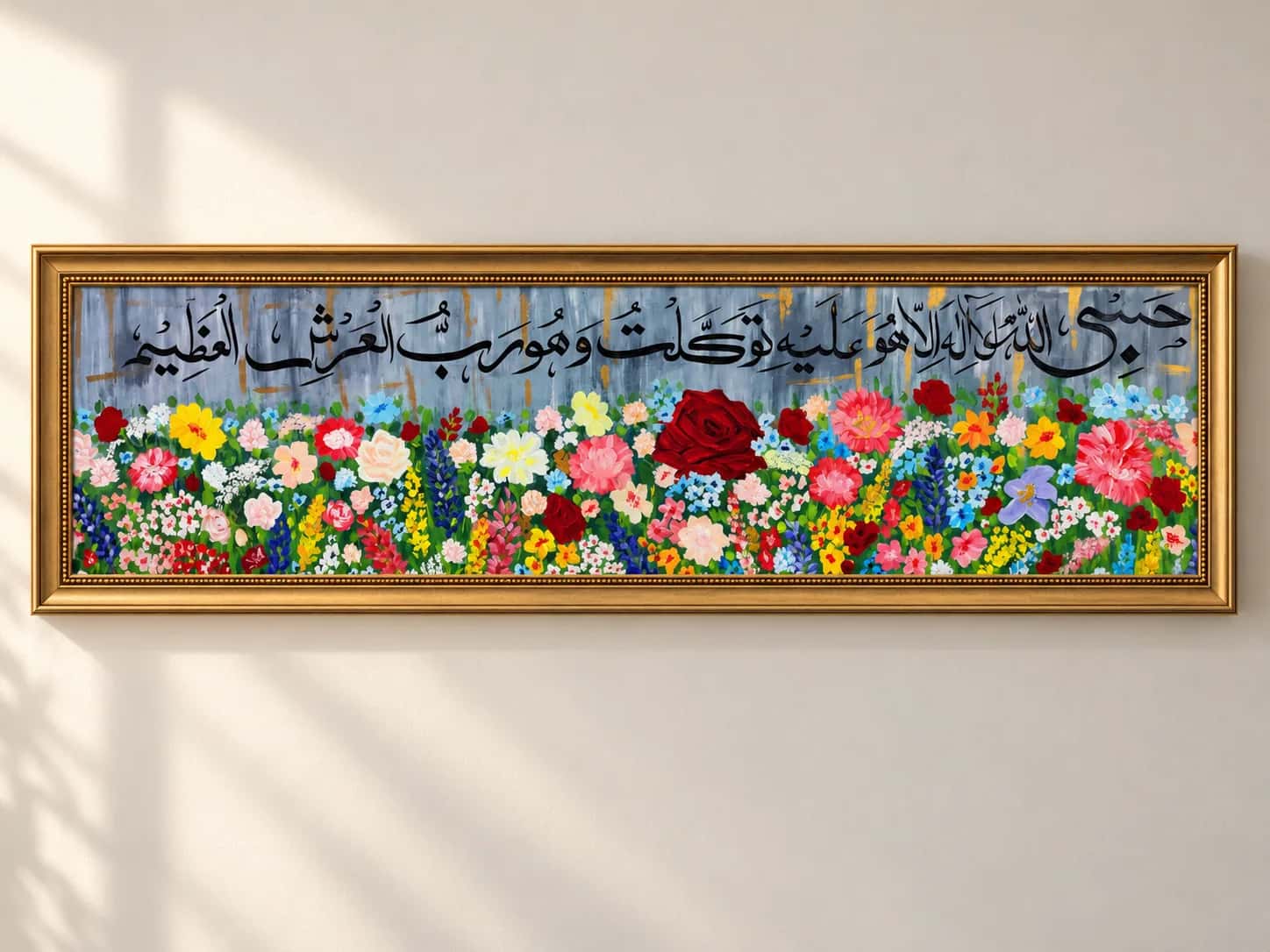
Hasbiyallahu Floral Garden Quran Verse Canvas