Calligraphy as Painting: Pakistan's Modern Tradition from Sadequain to Gulgee

Walk into almost any home in Pakistan and you will find calligraphy on the wall. Much of it is not written in ink on paper in the classical manner. It is painted, in colour, on canvas. That way of making calligraphy has a history, and two names stand at its centre.
Two traditions
Classical calligraphy, khattati, is a discipline of the reed pen. A calligrapher trains for years under a master to write a script according to exact proportions. Painterly calligraphy starts from the other direction: the artist is a painter who takes Arabic script as the subject, and uses colour, texture and gesture as freely as the letters. Pakistan has produced masters of both, and from the 1950s onwards the second became a movement.
Sadequain (1930 to 1987)
Syed Sadequain Ahmed Naqvi was born in Amroha and died in Karachi. He was a painter, muralist and poet, and came from a family of calligraphers. He is widely credited with bringing calligraphy into the mainstream of modern art in Pakistan.
- Murals. His large public works include Saga of Labour at the Mangla Dam power house, the ceiling of the entrance hall of the Lahore Museum, and the unfinished ceiling at Frere Hall in Karachi, known as Arz-o-Samawat, which he was painting when he died.
- Style. His letters are angular and energetic, often compared to the spiky cactus he said had inspired him.
- Recognition. He received the Tamgha-e-Imtiaz in 1960, the Pride of Performance in 1962 and the Sitara-e-Imtiaz in 1980.
Ismail Gulgee (1926 to 2007)
Gulgee was born in Peshawar and trained as an engineer, studying at Aligarh and then in the United States. He first became known as a portrait painter and was commissioned to paint heads of state. Later he turned to large abstract canvases based on Islamic calligraphy, made with sweeping movements of the whole arm.
- Materials. He sometimes worked gold and silver leaf and mirror glass into his oil paintings, so that the letters flash as the viewer moves.
- Where to see it. His work can be seen at the Faisal Mosque in Islamabad.
What they changed
- Calligraphy left the page. It moved onto large canvases and walls, and into public buildings.
- Colour and texture became part of the meaning. The mood of a verse could be carried by the painting around it.
- The artist's hand mattered. Each piece was a personal work, not a copy of a model.
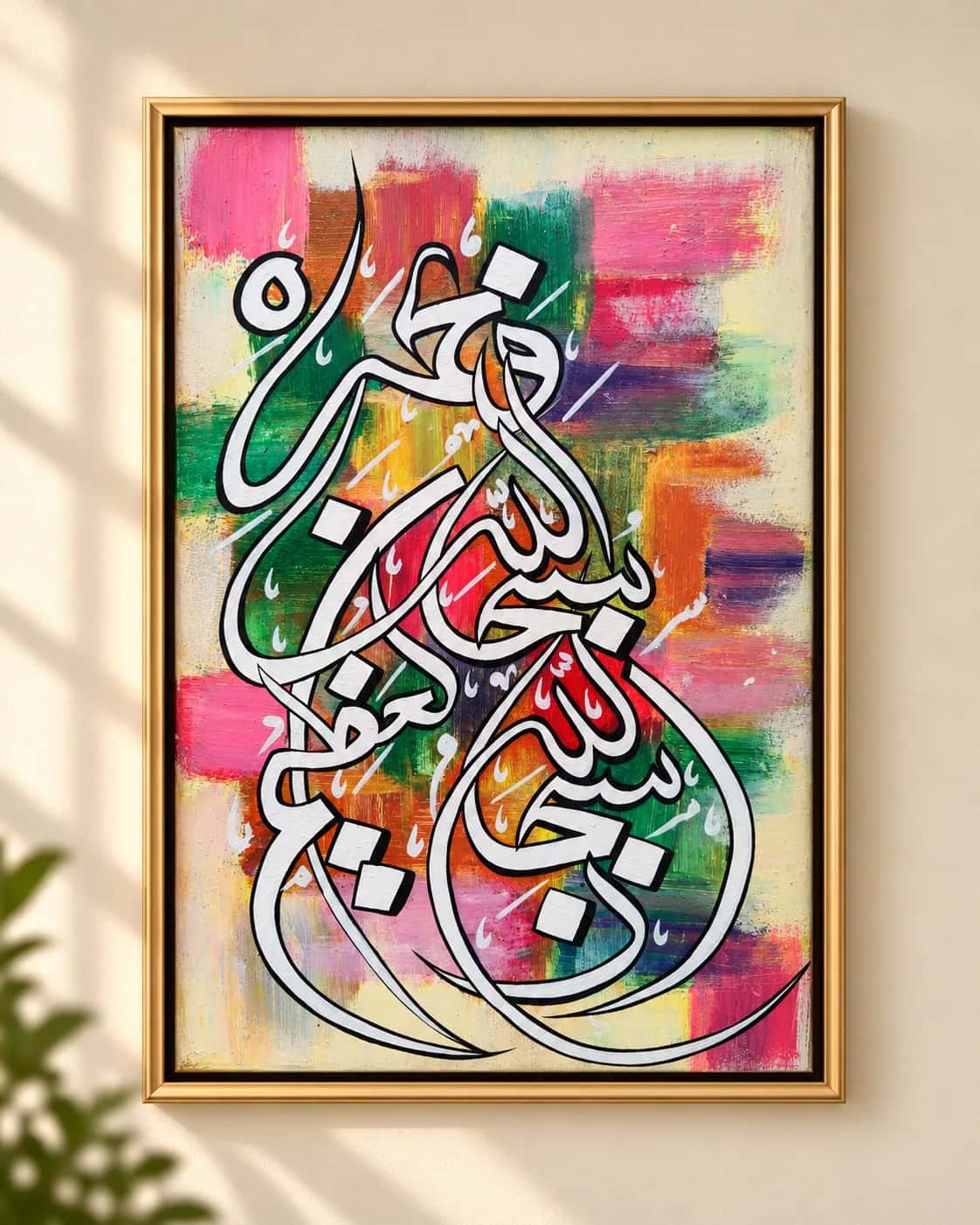
The colourful, layered calligraphy painted in studios across Pakistan today descends from that change. Pieces such as the Green Dome and Muhammad ﷺ canvas or the With Hardship Comes Ease canvas, where script moves across bright abstract colour, belong to the same family.
What this means when you buy
- Decide which tradition you want. A classical piece prizes perfect letterforms. A painterly piece prizes composition, colour and feeling. Neither is better.
- The text must still be right. Freedom of style is never freedom with the words. Read how to check the text on a painting.
- Look for the hand. Brush marks, layered paint and small variations are what you are paying for. See handmade or printed?.
- Know what paintings cost. The price guide for Pakistan explains what affects the price of an original.
Browse handmade calligraphy paintings from Pakistan, or read the longer history of Islamic calligraphy.
Sources
- Wikipedia: Sadequain (dates, murals and awards).
- Wikipedia: Ismail Gulgee (dates, training, materials and commissions).
Artwork in this article
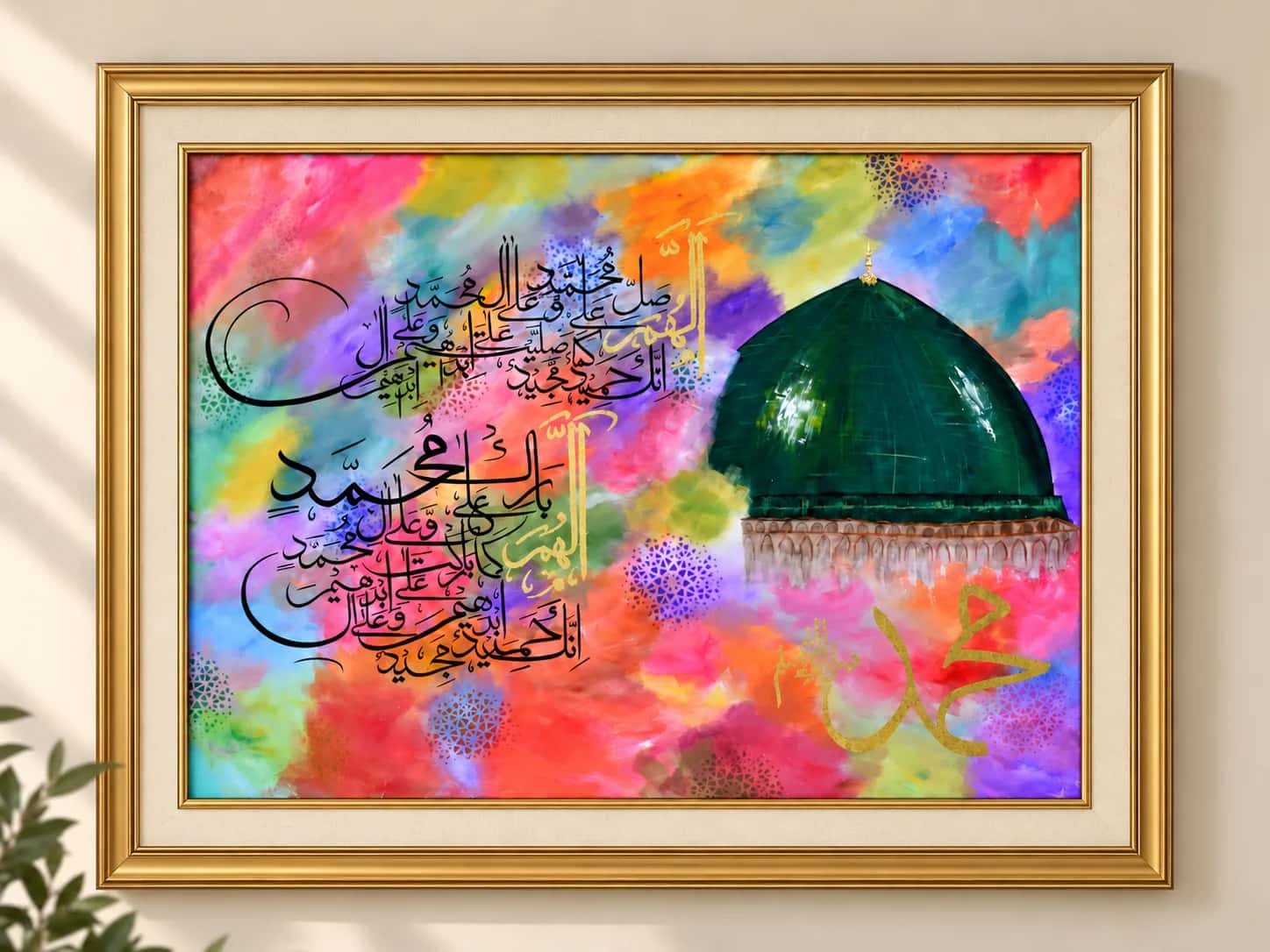
Masjid Nabawi Green Dome & Muhammad Calligraphy Canvas