Textured Islamic Wall Art: How Raised Surfaces Are Made, Lit and Cared For

A textured painting is one where the surface itself has shape. Lettering stands up from the canvas, waves have crests, petals have edges you could feel. It is the clearest difference between a painting made by hand and a flat print, and it is why textured pieces have become so popular in modern Islamic art.
How texture is made
- Thick paint. Paint applied generously with a brush or a palette knife keeps the marks of the tool. Artists call this impasto.
- Pastes and gels. Modelling paste and similar materials are spread or shaped on the canvas first, left to harden, and then painted. This is how deep ridges, folds and raised patterns are built.
- Stencils. Paste pushed through a stencil leaves crisp raised patterns, such as geometric borders or damask motifs.
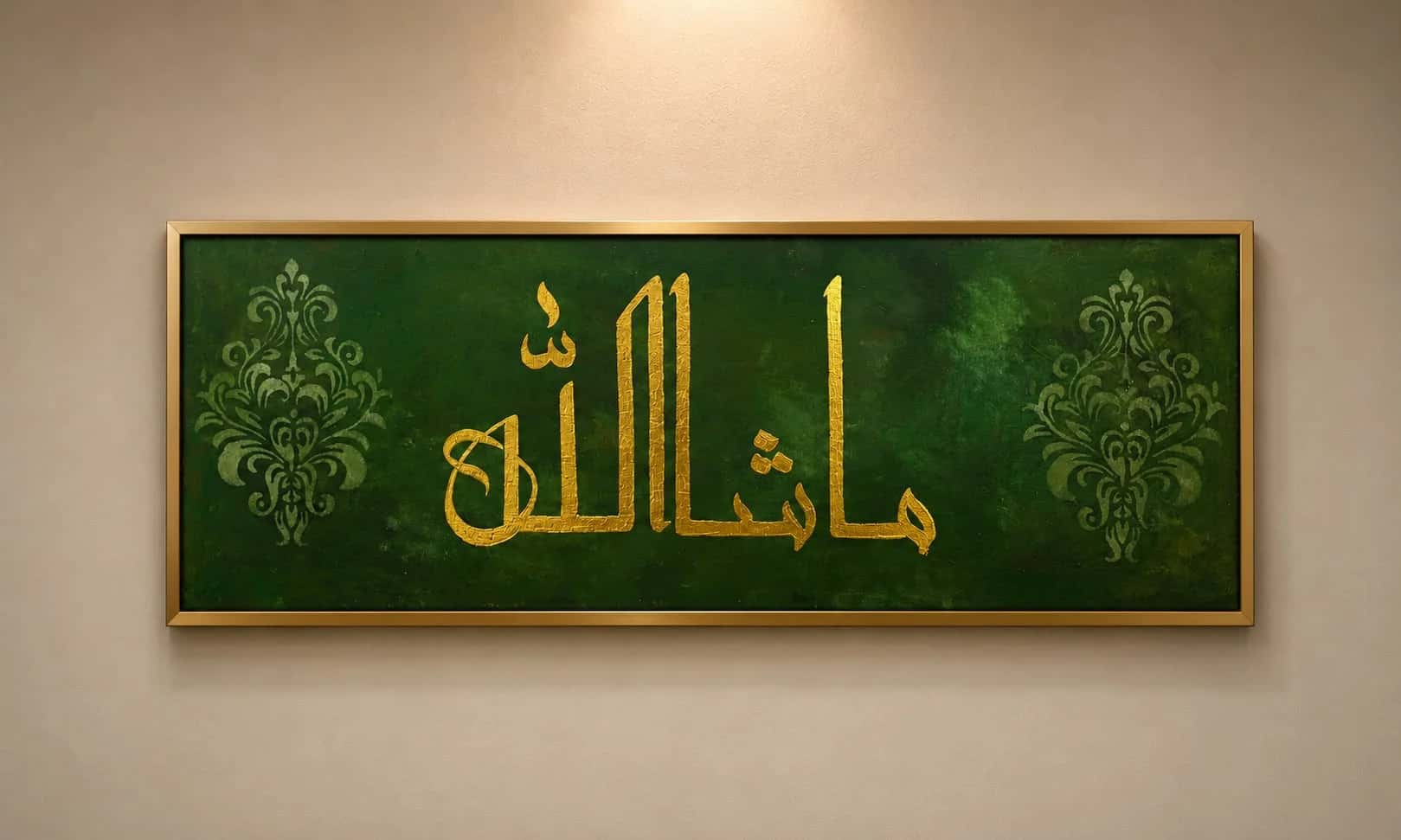
- Raised lettering. Calligraphy can be built up in layers so that each letter stands slightly proud of the background, then finished in metallic paint or leaf.
- Added materials. Sand, shells, fabric and other materials are sometimes fixed into the surface. This is called mixed media; see mixed media art.
Each product page lists the medium used for that piece, so you can see how it was made.
Why texture changes a room
A flat picture looks the same at noon and at night. A textured surface catches light differently as the sun moves and as lamps come on, so the painting is never quite the same twice. Metallic paint on a raised surface is especially lively, because each ridge reflects at a slightly different angle.
Examples
- Fabi Ayyi Ala ocean and seashell canvas: raised surf and shells along a painted shoreline.
- Kaaba Kiswah-inspired canvas: black folds that recall heavy cloth.
- Masha'Allah emerald and gold damask canvas: textured gold lettering with stencilled motifs.
- More in textured Islamic art.
Lighting a textured piece
Texture needs light from the side or from above at an angle. This raking light throws tiny shadows behind every ridge and makes the surface visible. Light shining straight at the canvas flattens it. A wall near a window, lit from one side during the day, with an angled spot or picture light for the evening, is ideal. See how to light wall art at home.
Care
- Dust gently. Use a soft, dry artist's brush or a clean make-up brush, working from top to bottom. Cloths can catch on raised edges.
- No water or sprays. Moisture can soften pastes and lift metallic finishes.
- Do not press. Raised details can chip if knocked. Carry the painting by its sides and never stack anything against the front.
- Keep it dry and cool. Avoid kitchens, bathrooms, and the wall directly above a heater or under an air conditioner.
- Keep the box. If you move house, the original packaging is the safest way to transport a textured piece.
The artwork care guide has more.
What to ask before you buy
- Is the texture painted or printed? Some prints imitate texture with a photograph of it. Ask for a close photograph taken from the side. Our article handmade or printed? lists seven checks.
- How deep is it? Deep texture needs more careful packing and a little more space from passing shoulders in a corridor.
- What surface is it on? Read stretched canvas or canvas board.
Texture suits verses about the natural world particularly well; see sea, moon and garden in Islamic art.
Sources
- Technique terms (impasto, modelling paste, mixed media) as used by art materials suppliers; care advice from the InkByHand artwork care guide.
Artwork in this article
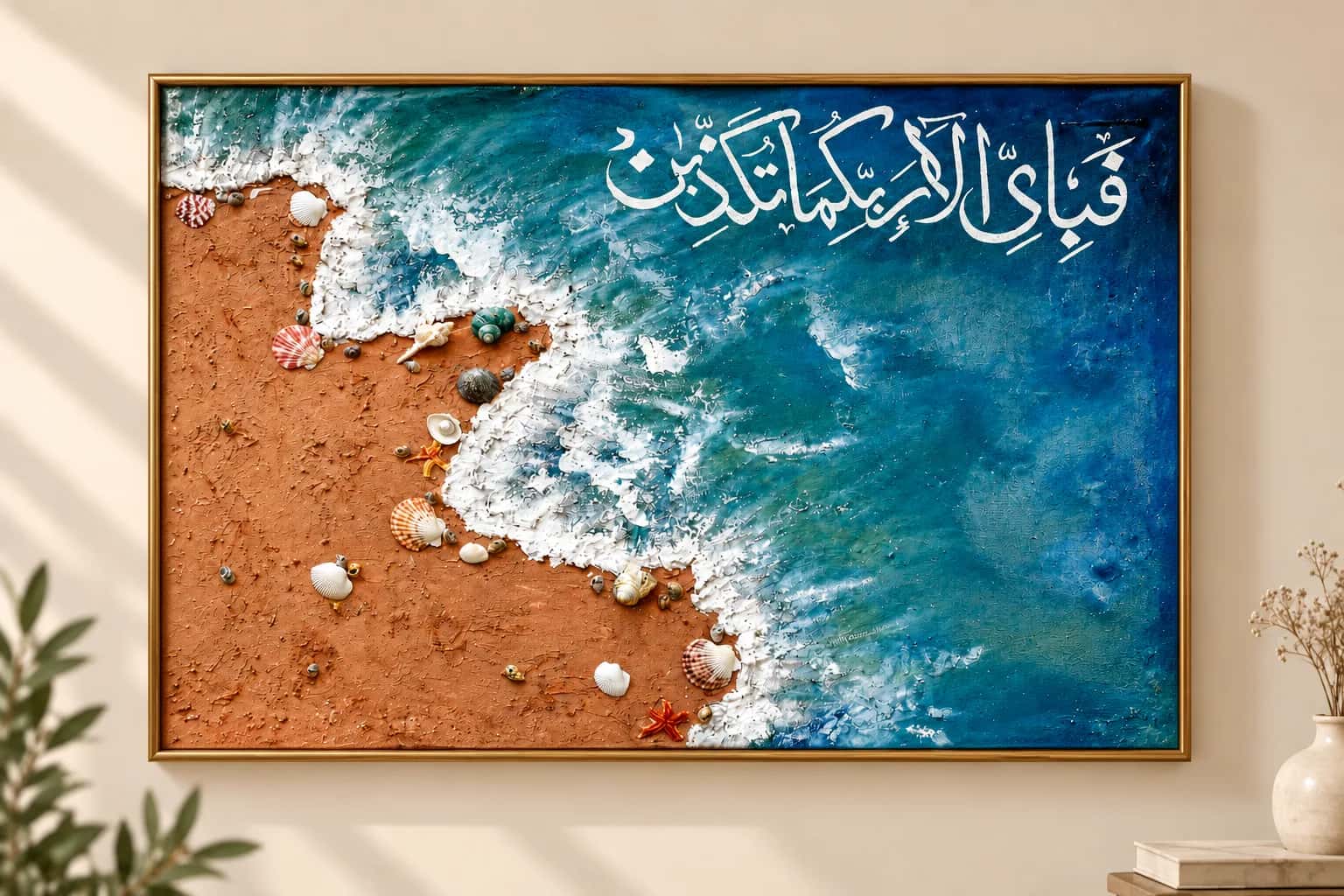
Fabi Ayyi Ala Ocean & Seashell Islamic Canvas Art

Kaaba Kiswah-Inspired Black & Gold Textured Canvas Art